Costco Charcoal Grills: A Practical Buying Guide
Buying a charcoal grill at Costco can feel surprisingly strategic, because the warehouse often mixes competitive pricing, seasonal stock, and a focused range of grill styles. For shoppers who want real fire-cooked flavor without scrolling through hundreds of nearly identical models, that narrower selection can be a genuine advantage. The real trick is knowing which features matter before a popular unit disappears from the floor or website. This guide walks through the lineup, the trade-offs, and the buying details that help you choose with confidence.
Outline and Why Costco Matters for Charcoal Grill Shoppers
Before comparing lids, vents, and cooking grates, it helps to understand why Costco is a different kind of grill-shopping environment. Unlike a specialty barbecue retailer that may carry dozens of charcoal models year-round, Costco typically curates a smaller assortment that shifts with the season, region, and available inventory. That can make the shopping experience refreshingly simple, but it also means timing matters. A grill you see in early spring may be gone by mid-summer, and a warehouse floor model may not match what is listed online. For buyers who prefer a cleaner decision process, that limited selection can be useful. For buyers who want endless customization, it can feel like a race against the calendar.
This guide is organized to make that decision easier. It follows a practical outline:
- How Costco’s grill assortment typically works
- The main charcoal grill styles you are most likely to encounter
- The features that separate a good buy from an expensive headache
- How pricing, bundles, and ownership costs affect overall value
- Which type of grill fits different cooking habits and households
Costco is especially relevant for budget-conscious shoppers who still want dependable quality. The warehouse model often emphasizes fewer choices, larger sales volume, and bundled products. In the grill category, that can translate into attractive package deals, occasional premium models at strong prices, and accessories included in the box. A cover, side shelves, charcoal baskets, or upgraded grates may be part of the offering, and those extras can matter more than they appear at first glance. The grill itself gets the spotlight, but the bundle often decides the real value.
Another reason Costco deserves attention is the blend of in-person inspection and online convenience. If a charcoal grill is on the warehouse floor, you can inspect the lid thickness, wheel stability, hinge movement, and general finish quality. That hands-on moment tells you more than polished marketing photos ever will. If you shop online, you may gain access to a broader selection or delivery options, but you lose that tactile preview. In other words, Costco sits at an interesting crossroads: part treasure hunt, part practical purchase. And for many backyard cooks, that is exactly what makes the search enjoyable.
Understanding the Main Types of Charcoal Grills Costco May Carry
Charcoal grills are not one-size-fits-all tools. Even when two models burn the same briquettes or lump charcoal, they can behave very differently in real cooking. At Costco, the most common styles tend to fall into a handful of familiar categories, and understanding them can instantly narrow your options.
The classic kettle grill remains one of the smartest starting points. Its rounded shape promotes even heat circulation, which makes it surprisingly versatile. A well-designed kettle can grill burgers and steaks directly over the coals, then shift into indirect cooking for chicken, ribs, or even a small roast. Many popular kettle sizes sit around 18 to 22 inches in diameter, which is enough space for an average household without becoming bulky. For beginners, kettles are often the easiest way to learn fire management. They are simple, proven, and less intimidating than larger specialty cookers.
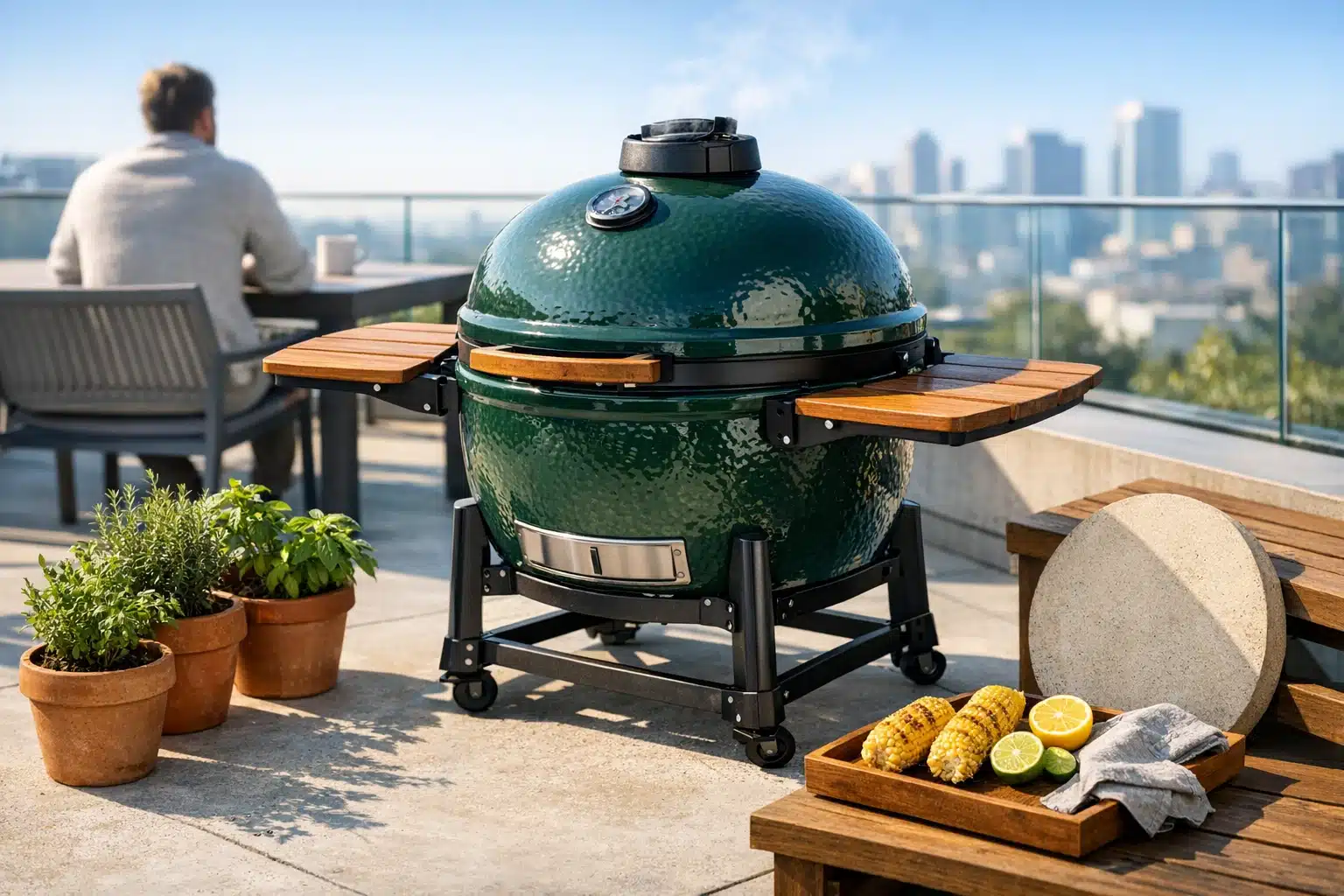
Kamado-style grills are the heavyweight thinkers of the charcoal world. Usually made from ceramic or insulated metal, they are designed to hold heat efficiently and maintain stable temperatures for long periods. That makes them particularly attractive for low-and-slow barbecue, baking, and high-heat searing. A kamado can act like a grill, smoker, and outdoor oven in one unit. The trade-off is cost, weight, and learning curve. These grills usually require more careful airflow control, and moving them is not a casual weekend task.
Some Costco shoppers may also encounter cart-style or barrel-inspired charcoal grills. These often provide more cooking area, built-in prep space, and a familiar “backyard centerpiece” look. They can be appealing for families or hosts who cook in batches. However, size alone does not guarantee better performance. A large charcoal grill with poor vent design or thin metal can waste fuel and deliver uneven heat.
Portable charcoal grills occupy another corner of the category. They are useful for camping, tailgates, or small patios where full-size equipment feels excessive. The downside is obvious: less cooking space, fewer convenience features, and more frequent charcoal refills during longer cooks.
When comparing styles, think in terms of cooking behavior rather than appearance:
- Kettle grills are flexible and approachable
- Kamado grills excel at efficiency and temperature control
- Cart-style units prioritize space and convenience
- Portable models favor mobility over capacity
The best choice depends less on what looks impressive in the aisle and more on how you actually cook. If your usual menu is weeknight burgers and weekend chicken thighs, a solid kettle may be the hero. If you dream about brisket, pizza, and twelve-hour charcoal burns, a kamado may justify the leap.
Features That Deserve Close Attention Before You Buy
Once you know what type of charcoal grill suits your cooking style, the next step is feature analysis. This is where many buyers either make a smart long-term decision or get distracted by surface-level appeal. A glossy finish and a large lid handle may look impressive under warehouse lighting, but performance comes from the details.
Start with construction quality. Heavier materials usually retain heat better and resist warping more effectively than thin metal. That does not mean every heavy grill is excellent, but weight often hints at durability and heat stability. Check the lid and bowl fit. If they meet cleanly and feel solid, temperature control is usually easier. On kamado-style grills, insulation and gasket quality are especially important because air leaks can undermine the very efficiency that makes these cookers attractive.
The cooking grate matters more than many first-time buyers expect. Porcelain-coated steel grates are common and relatively easy to clean, while cast iron grates can produce strong sear marks and retain heat well. Stainless steel grates often appeal to buyers looking for easier maintenance and corrosion resistance. None is universally perfect. Cast iron rewards care but punishes neglect. Stainless is practical but may not hold heat quite the same way as heavier materials. Porcelain-coated options can strike a good middle ground if the coating remains intact.
Airflow control is the heart of charcoal cooking. Well-placed intake and exhaust vents allow you to regulate heat, stretch fuel, and move between direct and indirect cooking with less frustration. Poor vent design turns grilling into guesswork. Look for dampers that move smoothly, hold position, and do not feel flimsy. If a grill cannot control oxygen well, it cannot control temperature well.
Convenience features also deserve a serious look:
- An ash collection system can make cleanup far faster
- A hinged grate helps you add charcoal mid-cook without awkward lifting
- A built-in thermometer is useful, though grate-level temperature is often more accurate than lid temperature
- Side shelves and tool hooks improve workflow during longer cooks
- Sturdy wheels matter if the grill will move across decking, concrete, or lawn
There is also the question of usable space. A grill advertised with a large total cooking area may include warming racks or upper tiers that do not function like the main grate. Think about how many burgers, chicken pieces, or racks of ribs you realistically cook at once. A family of four does not always need the same layout as someone who hosts neighborhood gatherings.
Finally, pay attention to assembly and maintenance. Some grills are straightforward to build with basic tools; others test patience before the first coal is lit. Read the product details carefully if available, and consider where the grill will live. A model that performs beautifully can still become annoying if the ash removal is messy, the shelves wobble, or the cover fits poorly. In charcoal grilling, pleasure often begins long before the first bite. It starts when the equipment feels reliable rather than fussy.
Price, Value, and Costco-Specific Buying Considerations
Price is where Costco often enters the conversation, but the lowest visible number is not always the best value. A more useful way to shop is to think in tiers and then measure what you are getting at each level. Entry-level charcoal grills often appeal to casual users or first-time buyers. In general, these models can be excellent for basic grilling, but they may use lighter materials, offer fewer airflow controls, and include smaller prep areas. Midrange models usually improve on stability, finish quality, cooking flexibility, and accessory support. Premium charcoal grills, especially kamado-style units, aim for heat retention, multi-function performance, and longer-term durability.
At Costco, the value calculation often changes because bundles can reshape the deal. A grill that looks merely competitive at first glance may become more attractive if it includes a fitted cover, side tables, upgraded grates, or delivery. Conversely, a grill with a dramatic display presence can become less compelling if you still need to buy the accessories that make it truly convenient. That is why comparison shopping should include the total ownership package, not just the base unit.
Here are a few Costco-specific points worth weighing:
- Warehouse inventory can be seasonal and limited, so waiting too long may reduce your options
- Online selection may differ from in-store selection, sometimes with different pricing or delivery terms
- Display models let you judge build quality quickly, which is valuable for charcoal grills
- Policies, warranties, and service options can vary by product, so it is wise to review current details before purchasing
Fuel efficiency should also enter the value discussion. A well-insulated grill can use charcoal more efficiently than a thin-walled one, especially during longer cooks or cooler weather. Over time, that efficiency can narrow the gap between a cheaper model and a pricier one. The same logic applies to longevity. If a low-cost grill begins to rust, leak heat, or wobble after a short period, the savings can disappear quickly.
Another factor is the pace of your cooking ambitions. If you are not sure whether charcoal grilling will become a long-term hobby, buying a simpler model from Costco may be a smart and measured first step. If you already know that weekend smoking sessions and pizza nights are part of your future, spending more upfront on a capable kamado or better-built charcoal grill can be justified. The smell of lit charcoal may stir romance, but your budget still deserves logic.
In short, Costco can be a strong place to buy a charcoal grill when the model, bundle, and timing align. The smartest shoppers compare not only price tags, but also construction, included extras, fuel efficiency, and how often they will actually use the grill once the novelty fades.
Choosing the Right Costco Charcoal Grill for Your Cooking Style
The best charcoal grill is rarely the biggest, the most expensive, or the one with the boldest box art. It is the one that fits your cooking habits, your space, and your patience level. That may sound obvious, yet many shoppers still buy aspirationally. They imagine competition-style barbecue weekends, then spend most of the summer grilling sausages and corn. There is nothing wrong with ambition, but a practical match usually leads to more use and less regret.
If you are buying your first charcoal grill, a quality kettle-style model is often the most forgiving choice. It teaches essential skills such as arranging coals for direct and indirect heat, managing airflow, and cooking with the lid on. It also handles everyday grilling very well. If your household mainly cooks for two to six people and values simplicity, this format is hard to dismiss. It is the sensible sedan of the charcoal world, except it smells much better.
If you cook frequently and want to stretch beyond burgers and steaks, a more feature-rich charcoal grill or kamado-style model can open new doors. These grills often reward experimentation. You can roast chicken, smoke ribs, bake pizza, or chase the slow, steady rhythm of longer cooks. They make sense for enthusiasts who enjoy process as much as results. The trade-off is higher cost, more weight, and a greater need to learn temperature control.
Here is a useful way to match buyer type to grill style:
- Beginner or occasional griller: choose a dependable kettle with straightforward cleanup
- Family cook who entertains: consider a larger grill with more surface area and prep space
- Low-and-slow enthusiast: look closely at insulated or kamado-style models
- Small-space or travel-focused buyer: prioritize compact size and portability
Also think about the environment around the grill. Storage matters. Weather matters. Local fire rules matter. Some apartments, balconies, and shared buildings restrict charcoal use, so checking those rules before purchase is essential. If the grill will stay outdoors year-round, a cover and corrosion-resistant materials become far more important. If you move it often, wheel design and overall weight are not minor details.
Conclusion for Costco Shoppers
For Costco members looking at charcoal grills, the smartest path is simple: decide how you cook before deciding what you buy. A compact, well-built kettle can outperform a larger but weaker grill for many households, while an insulated premium model can be worth the expense for serious backyard cooks who want versatility and fuel efficiency. Costco’s appeal lies in its combination of value, curated selection, and occasional standout deals, but the limited assortment makes preparation especially important. Go in with a clear sense of your budget, space, preferred foods, and willingness to manage live-fire cooking. When those pieces line up, the right charcoal grill stops being a seasonal purchase and starts becoming part of how you spend weekends, feed friends, and enjoy your own backyard.