Home Depot Scratch and Dent Lawn Mowers: What to Know Before You Buy
A scratch-and-dent lawn mower can look like a compromise, but for many homeowners it is simply a smarter way to buy the machine they already wanted at a lower price. At stores such as Home Depot, these discounted units may include floor models, customer returns, or mowers with cosmetic damage that never affects cutting performance. The trick is knowing how to inspect them, compare the markdown against warranty coverage, and decide whether a dented deck is a harmless blemish or a warning sign. This guide walks through the trade-offs so you can shop with clear eyes instead of guesswork.
Outline: This article starts by explaining what “scratch and dent” usually means in the lawn mower aisle and why these units appear in the first place. Next, it shows how to inspect a mower in practical detail, including the deck, wheels, controls, battery, engine area, and signs of abuse that matter more than chipped paint. The third part compares scratch-and-dent deals with new, used, and refurbished alternatives so you can judge actual value instead of reacting to the sticker alone. The fourth section covers warranty, returns, timing, and store-level variables that often decide whether the deal is safe. The final section is a reader-focused conclusion that helps homeowners, first-time buyers, and budget shoppers decide when to buy and when to walk away.
1. What “Scratch and Dent” Really Means for a Lawn Mower
When shoppers hear the phrase “scratch and dent,” they often picture a machine that has been battered around a loading dock. In reality, the label can cover a wide range of situations. A mower may be a floor model rolled back and forth by customers, a boxed unit damaged in transit, an item returned after a short trial, or a machine with cosmetic flaws discovered during unpacking. At a large retailer such as Home Depot, the exact reason varies by store, season, and brand, which is why the label alone tells you very little. You are not buying a category. You are buying one specific machine with one specific history.
That distinction matters because cosmetic defects and functional defects live in very different worlds. A scratched handle, a cracked plastic grass bag frame, or a dented shipping carton may have little effect on mowing. A bent blade shaft, deck warping, loose wheel assembly, or damaged battery housing is another story entirely. One is an inconvenience to your eyes. The other can shorten the life of the machine, affect cut quality, or turn a cheap purchase into a repair project.
It helps to think of lawn mowers in layers. The outer layer is appearance. The middle layer is usability. The inner layer is mechanical health. A bargain is only a bargain when the problem stays on the outer layer. Once damage reaches the structure or drive system, the discount has to be much deeper to make sense.
In many stores, scratch-and-dent markdowns exist because retailers would rather recover part of the value quickly than keep imperfect inventory taking up floor space. That can work in your favor. The most attractive deals are often tied to issues such as:
• open-box packaging
• display wear
• a returned unit with no meaningful runtime
• minor cosmetic dents in non-critical panels
• seasonal clearance combined with visible scuffs
Still, lawn mowers are not decorative objects. Their job is mechanical, repetitive, and demanding. They vibrate, cut through resistance, and operate close to dirt, moisture, and debris. That means damage you would ignore on a bookshelf deserves closer attention here. A dent near a wheel mount or deck edge can alter airflow and cut pattern. A handle that folds awkwardly may signal stripped hardware. A battery mower with a missing charger is not a deal until replacement cost is factored in.
The practical takeaway is simple: “scratch and dent” is not a verdict, either good or bad. It is an invitation to investigate. If you understand the difference between surface wear and structural trouble, you start shopping like a careful owner instead of a hopeful gambler. That shift in mindset usually saves more money than the discount tag itself.
2. How to Inspect a Discounted Mower Before You Commit
If there is one rule worth remembering in the scratch-and-dent aisle, it is this: inspect the mower like you are already responsible for repairing it. That small mental shift changes everything. Instead of asking, “Can I live with this scuff?” you begin asking, “Will this flaw affect operation, safety, maintenance, or resale?” A lawn mower is closer to a tool than an appliance, and tools reveal their quality through fit, alignment, and feel.
Start with the deck, because the deck is the heart of cut quality. Look at it from the front and both sides. Does it appear symmetrical, or does one edge look bent upward or pushed inward? Even a mild dent can matter if it narrows blade clearance or disrupts airflow that lifts grass before cutting. A scratched finish is usually harmless. A crease in stamped steel or a crack near a mounting point deserves caution. On riding mowers or larger walk-behind units, deck integrity matters even more because repair costs rise fast.
Next, check the wheels. Roll the mower a short distance if the store allows it. The movement should feel even, not wobbly or resistant on one side. Pull gently on each wheel to test for play. Excessive looseness can point to damaged axle hardware or poor reassembly after a return. If it is a self-propelled model, squeeze the drive control and make sure it moves smoothly without sticking or slack that feels abnormal.
Then look at the handle assembly and controls. Fold points, cables, levers, and locking knobs should feel secure. A mower with bent handle tubing may still stand upright but can become annoying every time you steer, store, or transport it. Pay attention to control cables that appear pinched, frayed, or rerouted awkwardly. Those are easy to miss in store lighting and surprisingly expensive when replacement parts are brand-specific.
For gas models, inspect:
• pull cord condition
• oil cap and fill area
• fuel cap seal
• signs of oil leakage
• air filter cover security
• rust around key fasteners
For battery models, inspect:
• battery casing for cracks or swelling
• charger inclusion
• contact terminals for corrosion
• latch security in the battery bay
• display lights or diagnostics if the unit powers on
Blade condition matters too, but not just for sharpness. A nicked blade can be replaced. What you really want to notice is anything that suggests the blade hit something hard enough to transfer force upward. If the blade looks badly gouged, ask yourself what it met and whether the shaft, spindle, or motor also absorbed that impact.
Finally, ask direct questions. Was it a return, a display, or transit damage? Is every accessory included? Does the manufacturer warranty still apply from the purchase date? Can the store note missing parts on the receipt? A good inspection is part eyesight, part touch, and part conversation. When all three line up, a scratch-and-dent mower becomes far less mysterious and much easier to judge on merit.
3. Price and Value: Comparing Scratch-and-Dent, New, Used, and Refurbished Mowers
The easiest mistake in bargain shopping is confusing a lower price with better value. A scratch-and-dent lawn mower may be cheaper than a factory-fresh model, but the real question is whether the savings justify the uncertainty. That comparison becomes sharper when you place it beside three alternatives: buying new at full price, buying used from a private seller, or buying refurbished from a manufacturer or authorized outlet.
Let us start with new. A brand-new mower usually gives you the cleanest buying experience: untouched parts, full packaging, straightforward return handling, and the least ambiguity about wear. You pay more, but some of that price goes toward confidence. If the scratch-and-dent unit is only lightly discounted, that confidence may be worth the extra money. As a rule of thumb, small markdowns on visibly flawed equipment are often less compelling than they first appear, especially if replacement accessories are missing.
Used mowers, by contrast, can be cheaper than scratch-and-dent retail units, but they come with a different risk profile. A private seller may not know the full service history, may not offer any return option, and may be parting with the machine precisely because it has become temperamental. The advantage is that used listings sometimes produce excellent deals for mechanically sound machines owned by careful people. The disadvantage is that inspection quality depends almost entirely on your own experience.
Refurbished mowers sit somewhere in the middle. When properly restored and tested, they can be appealing because someone has already evaluated the machine and addressed known issues. However, the term “refurbished” is only helpful when the seller clearly explains what was repaired or replaced. Without that detail, the word becomes decoration.
Scratch-and-dent units at a major retailer often feel safer than a random used purchase because there may still be a receipt trail, store policy, and possible warranty coverage. Pricing is the pivot point. In many cases, cosmetic-only floor models might be discounted in the low double digits, while open-box or more visibly marked units may drop further. End-of-season timing can also deepen reductions. But price must be weighed against what you are losing:
• certainty about history
• perfect condition
• complete packaging and accessories
• time if a problem appears later
Think in total ownership cost, not sticker price. If a mower is discounted by $80 but needs a $40 battery charger and a $25 blade replacement, the gap narrows quickly. If a new equivalent is on promotion with full packaging and warranty, the “deal” may not be one. On the other hand, if the damage is truly cosmetic and the markdown is meaningful, the math can be excellent. A self-propelled mower with a minor scuff on the deck but solid warranty coverage can make far more sense than a cheaper used model with unknown hours and no fallback.
This is where calm comparison wins. Stand still for an extra five minutes. Check new prices online, inspect missing items, and estimate what it would cost to make the unit whole. A good buyer does not chase the red tag. A good buyer measures the gap between price and risk, then buys only when that gap is clearly favorable.
4. Warranty, Returns, Timing, and Other Details That Change the Deal
Scratch-and-dent shopping becomes much easier when you understand the part that is not visible on the mower itself: the policy environment around it. Two machines with identical dents can represent very different deals if one has a clean return path and the other is effectively final sale. This is why experienced shoppers do not stop at the markdown label. They ask about return windows, warranty activation, assembly status, included parts, and who handles a defect if something fails after the first few cuts.
Warranty is often the biggest swing factor. Some manufacturers honor the normal warranty from the date of purchase as long as the product was sold through an authorized retailer and is not labeled in a way that excludes coverage. Others may limit coverage on certain discounted or open-box items. The only safe approach is to verify before paying. If the store associate is unsure, ask for documentation, packaging details, or a manager confirmation. A mower with a modest cosmetic flaw and full warranty support can be a rational buy. The same mower without warranty may require a far deeper discount.
Returns matter just as much, especially for battery models and self-propelled units. Not every issue announces itself on the sales floor. A battery may seem fine but show weak runtime at home. A drive system may engage under no load yet struggle in actual grass. If a return window exists, test the mower promptly and keep all paperwork. A bargain gets dangerous when it sits in the garage for three weeks before first use and the store window quietly closes.
Timing also shapes value. Lawn equipment pricing tends to move with the season. Early spring often brings the broadest selection but not always the deepest markdowns. Late summer and early fall may produce better discounts as stores rebalance inventory, though selection thins out. Scratch-and-dent opportunities can appear anytime, but your odds improve when floor inventory has turned over, promotions change, or outdoor power equipment space is being repurposed.
Keep these practical questions ready:
• Is this unit a customer return, floor model, or transit-damaged item?
• Does the manufacturer warranty begin today?
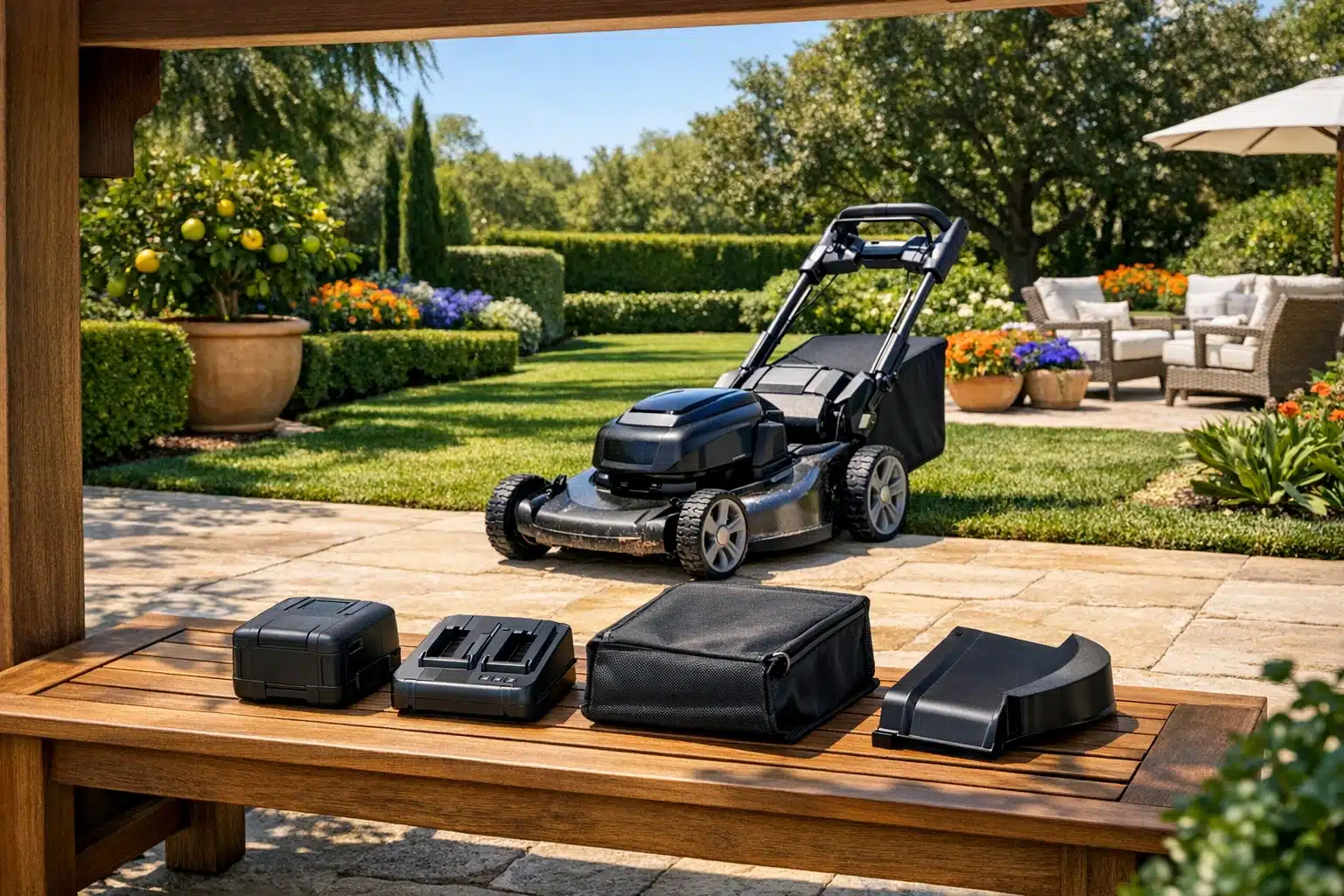
• Are the battery, charger, mulch plug, bag, and manuals included?
• Has the mower been assembled already, and by whom?
• Is the item eligible for standard return policy or marked final sale?
One more point is often overlooked: time is a cost. If you are handy and comfortable adjusting cables, replacing blades, or troubleshooting batteries, a scratch-and-dent mower may fit your style. If you need something that works immediately and reliably with minimal fuss, paying more for a sealed new unit may actually be cheaper in real life. The best deal is not the one with the biggest markdown. It is the one least likely to steal your Saturday with avoidable problems.
5. Conclusion: Who Should Buy a Scratch-and-Dent Mower, and Who Should Pass?
For the right buyer, a scratch-and-dent lawn mower can be one of those satisfying purchases that feels clever rather than cheap. You get the utility you need, avoid paying full price for a cosmetic imperfection, and still come home with a machine capable of keeping the yard under control. There is a quiet pleasure in that kind of practicality. Grass does not care whether the deck has a scuff near the side discharge door. But the decision works best when the buyer is realistic about risk and disciplined during inspection.
The strongest candidates are homeowners who know roughly what features they want and are comfortable evaluating condition. If you understand the difference between harmless wear and meaningful mechanical damage, the scratch-and-dent aisle can be a useful place to stretch a budget. It also suits shoppers who care more about function than appearance, such as landlords maintaining rental properties, experienced DIY owners, or anyone replacing an older mower without chasing the latest finish and packaging.
It may be a weaker fit for first-time buyers who are unsure what normal operation looks like, or for people who need maximum reliability with minimal troubleshooting. If you do not want to inspect wheel alignment, verify charger inclusion, or question warranty terms, the safer path may be a new machine with standard coverage and no ambiguity. That is not overpaying. That is matching the purchase to your tolerance for hassle.
A simple decision framework can help:
• Buy when the flaw is clearly cosmetic, the price gap is meaningful, and warranty or return support is intact.
• Pause when accessories are missing, the discount is small, or the machine’s history is vague.
• Walk away when the deck looks bent, the controls feel off, or the store cannot clarify policy.
For most readers, the smart move is not to hunt endlessly for a dramatic markdown. It is to know your acceptable price, your preferred mower type, and your deal-breakers before you step into the store. That way, when you find a unit with a scraped handle and a healthy motor, you can recognize it for what it is: not damaged goods, but discounted utility. In a category where performance matters more than polish, that can be a very sensible purchase. The key is staying patient, asking better questions than the average shopper, and remembering that the best bargain is the one you do not have to fix twice.