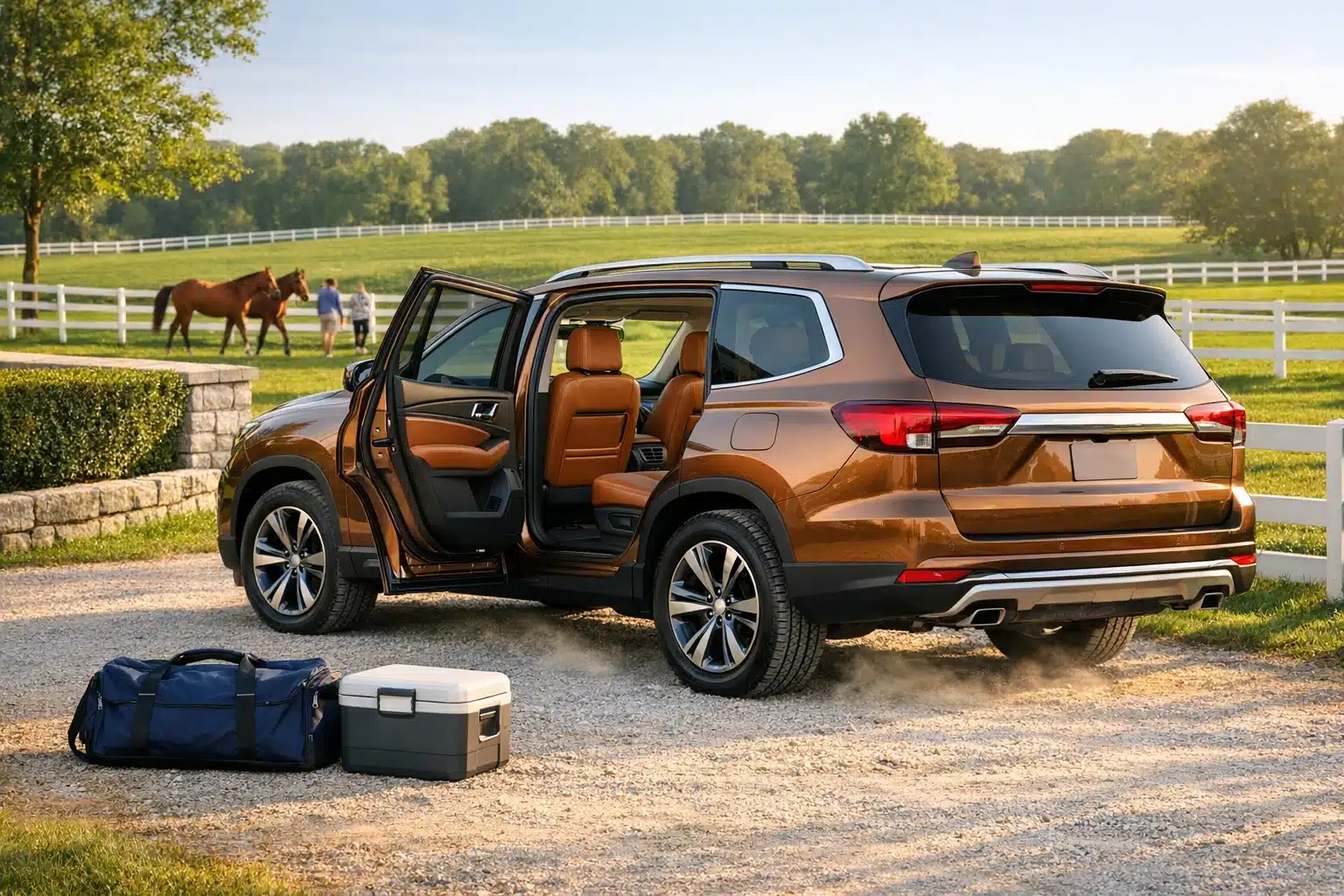
SUVs With 3 Rows and Captain Seats
Introduction
Choosing an SUV with three rows and second-row captain seats sounds simple until you compare cargo room, child-seat access, fuel economy, and the comfort of real adults in the back. This layout is popular because it opens a walkway to the third row and gives passengers more elbow room on longer trips. Yet not every model uses that space well, and a polished showroom look can hide a cramped final row or limited storage. This guide explains what truly matters before you buy.
Outline
This article begins with the reasons buyers are drawn to three-row SUVs with captain seats and the trade-offs that come with this layout. It then looks at cabin space, third-row usability, and how several popular models differ in real-world comfort rather than brochure language. Next, it covers safety, family-friendly features, and technology that matter in daily use. After that, it compares engines, efficiency, towing ability, and ownership costs. Finally, it closes with a buyer-focused conclusion that helps different households narrow the field.
Why Three Rows and Captain Seats Appeal to So Many Buyers
There is a reason this seating layout keeps showing up in family driveways, rental fleets, and suburban car pools: it solves a very specific set of problems without making the vehicle feel commercial or oversized. A traditional second-row bench gives you maximum seating, usually for seven or eight passengers depending on the SUV. Captain seats, by contrast, reduce that count by one in many models, but they change the atmosphere of the cabin in a way that many buyers immediately notice. The middle row feels more open, passengers get individual armrests, and the trip to the third row stops feeling like a gymnastic event.
That matters on ordinary days. Parents loading children into boosters appreciate the clear center pass-through. Grandparents often prefer the easier step to the back row. Teenagers, who are experts at detecting unfair shoulder-room arrangements, tend to complain less when everyone has a defined personal space. In many SUVs, captain chairs also create a more premium look. The interior feels less like a utility box and more like a lounge designed for actual humans. It is a small architectural change with a surprisingly big emotional effect.
• Easier third-row access without folding a seat every time. • Better personal space for second-row passengers. • A more upscale feel in many trims. • Less total seating capacity than a bench-equipped version.
The trade-off is important. If your household regularly carries seven or eight people, a bench may still be the smarter choice. Buyers sometimes fall in love with captain seats in the showroom, then realize they have given up the extra spot needed for a cousin, teammate, or visiting relative. This is why the question is not simply, “Are captain seats better?” but rather, “Are they better for the way you travel?” For a family of four to six, the answer is often yes. For households that constantly fill every seat, maybe not.
Another part of the appeal is flexibility. In many three-row SUVs, the second-row captain seats slide, recline, and fold independently. That makes it easier to balance legroom between rows. A tall adult can sit in the middle row while a child occupies the third, or the configuration can flip on holiday weekends when luggage suddenly becomes more important than knees. In short, captain seats are popular not because they are fashionable, but because they improve access, comfort, and day-to-day sanity in ways drivers notice almost immediately.
Space, Access, and Comfort: What Really Separates the Good SUVs From the Great Ones
Three rows on paper do not always equal three usable rows in reality. This is where many buyers get surprised. One SUV may advertise similar overall dimensions to another, yet feel dramatically tighter once actual people sit inside. The biggest difference usually shows up in the third row and in the cargo area behind it. Some models provide a back row suitable only for children or short hops across town. Others are designed with enough legroom and seat height to keep adults reasonably comfortable for longer drives.
As a broad rule, midsize three-row SUVs often offer somewhere from the mid-teens to low 20s in cubic feet of cargo space behind the third row, while roomier models can stretch beyond that. Third-row legroom also varies significantly, from cramped figures below 30 inches in tighter designs to the mid-30s in larger, more family-focused vehicles. Those numbers may look abstract online, but they translate into very real differences when a stroller, a week’s groceries, or two carry-on suitcases need to fit behind all three rows.
Several current SUVs have built reputations for using their footprints efficiently. Models such as the Kia Telluride, Hyundai Palisade, Volkswagen Atlas, Toyota Grand Highlander, and Chevrolet Traverse are often mentioned because they prioritize passenger room and straightforward packaging. Others, including more style-forward or performance-oriented choices, may offer excellent materials and road manners while giving up a little rear cargo space or third-row comfort. That does not make them bad vehicles. It simply means the right pick depends on whether you value handling, luxury ambiance, or pure family utility more.
• Measure the third-row seat height, not just legroom. • Check whether adults can place their feet naturally under the second row. • Bring a stroller, sports bag, or luggage to the dealer. • Test the slide and tilt operation of the captain chairs with real passengers aboard.
Access is another make-or-break detail. A center pass-through is wonderful, but only if it is wide enough and practical when child seats are installed. Some SUVs have second-row captain chairs that slide far enough forward to create a genuine path to the rear. In others, the opening exists, but it feels more like a suggestion than a solution. On a rainy afternoon with backpacks, snacks, and a sleeping toddler, the difference becomes obvious fast. The best cabins are not just spacious in a technical sense; they are calm, intuitive, and forgiving when family life gets messy.
Safety, Child-Seat Practicality, and the Technology Families Actually Use
A good three-row SUV does more than move people around. It helps reduce stress when visibility is poor, traffic is dense, and the cabin sounds like a portable cafeteria. Safety begins with structure and crash performance, so buyers should start by reviewing recent results from organizations such as the IIHS and NHTSA. Strong ratings are not the only measure of a good vehicle, but they offer a valuable baseline when narrowing down choices.
After that, the everyday safety tools matter a great deal. Forward collision warning, automatic emergency braking, blind-spot monitoring, rear cross-traffic alert, lane-keeping assistance, and adaptive cruise control have become common in the segment, yet their tuning varies. Some systems feel polished and helpful, stepping in smoothly when needed. Others are overly sensitive or poorly integrated, which can lead drivers to disable them. A useful test drive should include city traffic, parking maneuvers, and highway speeds so you can judge how these systems behave in normal use rather than ideal conditions.
Child-seat compatibility deserves special attention in SUVs with captain seats. The two second-row chairs are often the easiest spots for installing car seats because they provide better lateral space and more direct access to LATCH anchors. At the same time, once those seats are occupied by large child seats, the path to the third row may shrink. This is why parents should not rely on assumptions. Bring your actual car seat, test the anchor points, and check whether someone can still reach the back without removing gear or performing acrobatics in a parking lot.
• Look for rear-seat reminder systems if children or pets may ride in back. • A 360-degree camera is especially useful in large SUVs. • Multiple USB ports and dedicated climate controls keep rear passengers far more content. • Power-fold third-row seats save time when switching from people duty to cargo duty.
Technology can either support family life or complicate it. Large touchscreens, wireless smartphone integration, navigation, and in-car Wi-Fi all sound attractive, but usability matters more than bragging rights. Physical controls for temperature and volume are still helpful when the road gets busy. Rear sunshades, conversation mirrors, household-style power outlets, and easy-to-clean materials may not generate headlines, but they often improve daily ownership more than flashy graphics. In a family SUV, the smartest features are usually the ones that quietly save time, reduce frustration, and prevent small problems from becoming loud ones.
Engines, Fuel Economy, Towing, and the Real Cost of Ownership
Once the seating layout wins you over, the practical questions return quickly: how much will this SUV cost to run, and will it have enough muscle for your needs? The three-row segment offers a wide range of powertrains, from turbocharged four-cylinders to naturally aspirated V6 engines, hybrids, plug-in hybrids, and in some larger models, traditional body-on-frame setups with serious towing capability. There is no universal best choice because performance, efficiency, smoothness, and price rarely peak in the same place.
Gas-only midsize three-row SUVs often land somewhere around the high teens to mid-20s in combined fuel economy depending on engine size, drivetrain, and weight. Hybrids can improve that number substantially, sometimes moving into the high 20s or beyond, which can make a real difference for households piling on miles every week. Plug-in hybrids add short-range electric driving in some cases, but they usually cost more upfront and make the most sense when owners can charge regularly. For a commuter who also needs weekend family space, that setup can be compelling. For a buyer with no charging access, the math may be less attractive.
Towing is another point where shoppers should be realistic. Many crossover-based three-row SUVs tow around 3,500 to 5,000 pounds when properly equipped, enough for a modest boat, small camper, or utility trailer. Larger body-on-frame SUVs can go much higher, but they typically cost more to buy and fuel. If towing is only an occasional need, it may not justify stepping into a heavier vehicle with bigger monthly and running costs. If towing is central to your lifestyle, however, underbuying can be just as frustrating.
• Check whether the towing rating changes with front-wheel drive or all-wheel drive. • Compare fuel requirements, since some turbo engines prefer premium gasoline. • Review tire replacement costs, because larger wheels can raise long-term expenses. • Ask about service intervals and warranty coverage before focusing on headline horsepower.
The hidden costs deserve equal weight. Insurance premiums vary by brand, trim, and repair complexity. Depreciation can differ sharply between strong-selling family SUVs and less popular alternatives. Even the most comfortable captain chairs will not compensate for disappointing resale value if you trade in after three or four years. The most balanced purchase usually comes from matching engine choice and vehicle size to your real driving pattern, not the fantasy version of your life that tows every weekend and crosses mountain passes before breakfast.
Conclusion: Choosing the Right Three-Row SUV for Your Life, Not the Brochure
If you are shopping for an SUV with three rows and captain seats, you are probably trying to solve a familiar puzzle: you need space, flexibility, and comfort, but you do not want a vehicle that feels cumbersome or wasteful. The good news is that this category now offers better choices than it did a decade ago. The challenge is that many of them look excellent on paper, which makes it easy to focus on styling, screens, or trim names instead of the fundamentals that shape everyday ownership.
For parents with younger children, the smartest priorities are often easy car-seat installation, a usable path to the third row, rear climate controls, and enough cargo room behind the last seat for strollers or sports gear. For buyers carrying adults or teenagers often, true third-row comfort and second-row legroom should move to the top of the list. For road-trip households, ride quality, quietness, and fuel economy matter more than a dramatic grille. For drivers who tow, the powertrain and chassis should be chosen first, and luxury touches should come second. Different lives create different rankings.
• Choose captain seats if comfort and access matter more than maximum passenger count. • Prioritize measurements and test drives over marketing language. • Bring your real gear to the dealership. • Think about ownership over five years, not just the first week after purchase.
The best SUV in this class is not always the most expensive, the most powerful, or the one with the brightest interior lighting. It is the one that fits your passengers, your driveway, your fuel budget, and your routines without constant compromise. When that match is right, the vehicle fades into the background in the best possible way. School runs become simpler, long drives feel less crowded, and the third row stops being a reluctant backup plan. That is the quiet appeal of a well-chosen three-row SUV with captain seats: it supports busy lives with less drama, more comfort, and a little more breathing room every mile of the way.