Expert Tips for Finding Bank-Owned Skid Steer Loaders in 2026
Buying a skid steer can feel a bit like entering a busy jobsite at dawn: noisy, fast, and full of decisions that matter. Bank-owned units deserve attention because they often sit in the sweet spot between bargain pricing and usable condition, especially for buyers who need equipment more than showroom polish. In 2026, tighter budgets, high replacement costs, and a steady flow of repossessions make this corner of the market relevant to contractors, farmers, rental firms, and property owners alike.
Outline and Why Bank-Owned Skid Steers Matter
Understanding Bank-Owned Skid Steer Loaders begins with a simple idea: the bank or finance company is not in the equipment business, yet it sometimes becomes the temporary owner when a borrower defaults on a loan or lease. That ownership change creates a different kind of used-equipment marketplace. Instead of a machine being traded in by a contractor who wants something newer, the skid steer is being sold to recover debt. That distinction matters because it affects pricing, urgency, paperwork, and sometimes the amount of service history available to the next buyer.
Before moving deeper, here is a practical outline for the rest of the article:
- How bank-owned units differ from ordinary used skid steers
- Why repossessed machines can offer strong value in the right situations
- Where they are commonly sold, including auctions and liquidations
- What to inspect before bidding or making an offer
- How to think about pricing, transport, repairs, and total cost in 2026
A skid steer loader is one of the most versatile machines on a jobsite. With the right attachment, it can dig, grade, move pallets, clear brush, break concrete, auger post holes, and handle snow. Because these machines work across construction, agriculture, landscaping, and property maintenance, demand stays broad even when some sectors slow down. That broad demand is exactly why repossessed units draw attention. Buyers are often looking for utility first and cosmetics second.
Still, bank-owned does not automatically mean cheap, and cheap does not always mean good. Some repossessed machines were maintained reasonably well until cash flow broke down. Others were pushed hard and serviced late. A lender may know the outstanding balance, but it may not know whether the hydraulic pumps whine under load or whether a cold start reveals white smoke. That is why this market rewards calm, methodical buyers. Think of it less like treasure hunting and more like reading a machine’s biography through paint wear, service labels, tire condition, and hour meter clues.
When approached with patience, this category can be highly relevant in 2026. New equipment prices remain elevated compared with pre-pandemic norms, parts costs can surprise the unprepared, and smaller operators often need cash efficiency more than prestige. For those buyers, bank-owned inventory deserves a hard look.
Value, Timing, and the Upside of Repossessed Equipment
The Benefits of Purchasing Repossessed Skid Steers for Sale are real, but they become clear only when buyers evaluate value rather than simply chasing the lowest number on a listing page. A lender typically wants to convert the asset into cash, reduce storage time, and close the file. That motivation can create pricing that is more practical than emotional. A private owner may price a machine based on memories of every attachment ever bought for it. A bank usually focuses on recovery.
That difference can work in your favor in several ways:
- Lower acquisition cost compared with similar retail dealer listings
- Access to late-model machines that may still have modern controls and safety features
- A wider mix of brands, sizes, and attachment setups in one search cycle
- Potential room in the budget for repairs, transport, and preventive maintenance
Depreciation is the quiet engine behind many good equipment deals. Like pickup trucks and compact excavators, skid steers lose value fastest when new, then settle into a more gradual depreciation curve. A buyer who steps in after that initial drop may gain years of productive service without carrying the premium of a new machine. For a small contractor or farm operation, that matters. The savings might fund a bucket upgrade, a grapple, fresh tracks, or a reserve account for hoses and seals.
Another advantage is selection through distress rather than fashion. Repossessions are not grouped by style; they are grouped by circumstance. That means you may find an unusual combination of features that suits a niche job, such as high-flow hydraulics, enclosed cab, two-speed travel, or a specialty attachment package. One week the market looks thin, and the next week a regional finance company releases a cluster of fleet units that fit your needs almost exactly. It is a market that rewards regular checking.
Yet benefits only count if risk is priced in honestly. Repossessed equipment may come with incomplete maintenance records, cosmetic damage, weak batteries, weather exposure, or unknown periods of inactivity. Fluids may need immediate attention. Tires may look serviceable until you see sidewall cracking up close. The best buyers treat savings as a buffer, not a bonus. If a machine is discounted by several thousand dollars, part of that gap should remain available for filters, transport, inspection, and first-round repairs. That mindset turns a tempting listing into a workable asset instead of a budget trap.
Where to Look: Auctions, Liquidators, and Dealer Channels
Auction Skid Steer Loaders for Sale are often the first listings buyers notice because they are visible, fast-moving, and sometimes dramatically priced. Auctions can be productive, but they are only one part of the bank-owned landscape. Lenders may sell through national auction firms, regional liquidators, equipment dealers acting on consignment, online marketplaces, or direct sealed-bid processes. Knowing how each channel behaves can help you match your buying style to the right environment.
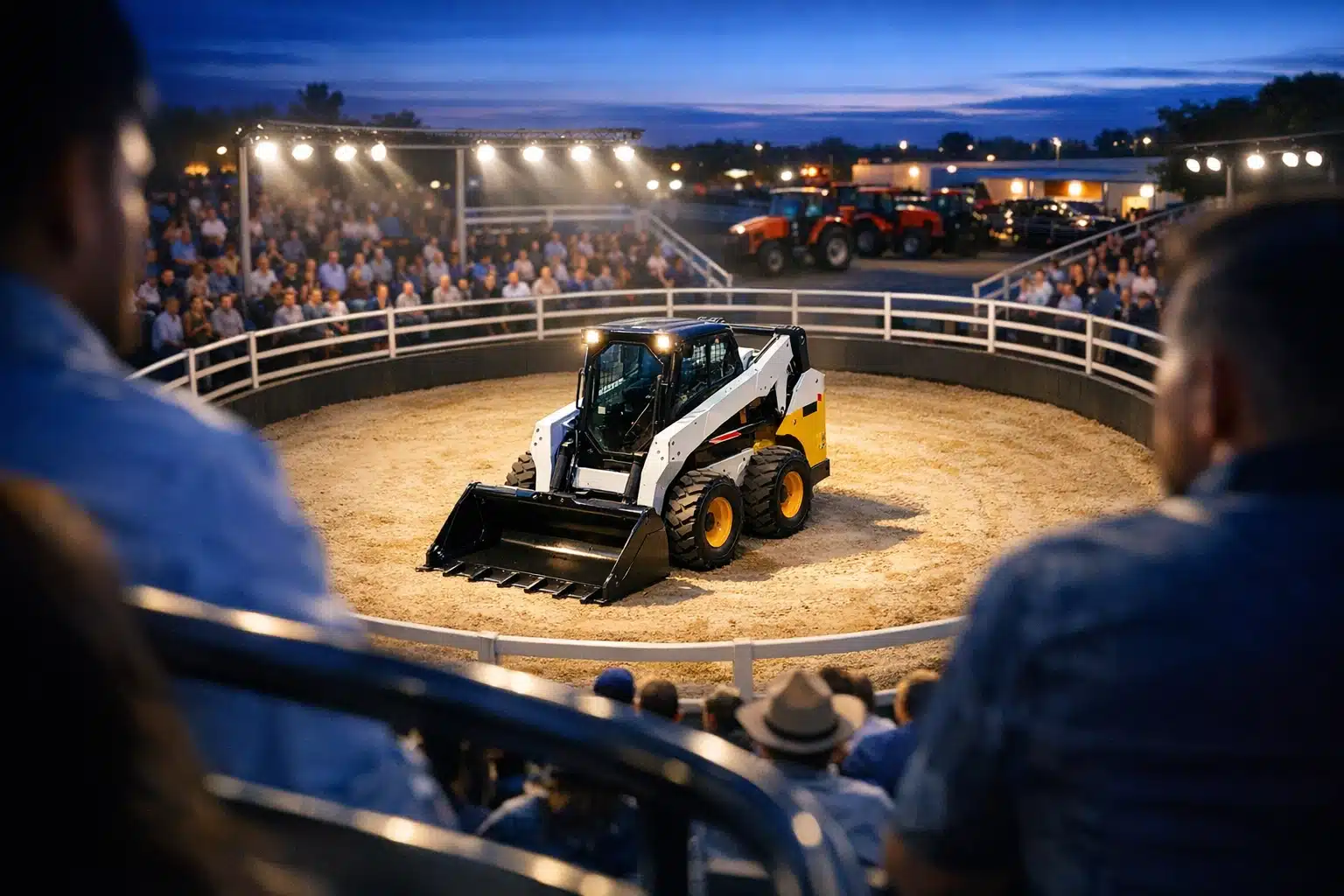
Live auctions create urgency. There is dust in the air, engines warming in the yard, and the auctioneer’s rhythm can make ordinary caution feel embarrassingly slow. Online auctions remove the noise, but they preserve the pressure through countdown clocks and last-minute bids. In both cases, the format favors buyers who already know their ceiling price, transport distance, and repair tolerance. If you are figuring those out while the timer is running, the market is already moving faster than you are.
Here is how common buying channels compare:
-
Auctions: Broad inventory and quick turnover, but buyer’s premiums, limited test opportunities, and competitive bidding can erase apparent bargains.
-
Liquidators: Often handle repossessions in volume and may provide decent photo sets, though inspections still vary widely.
-
Dealers with bank inventory: Prices may be higher, but machines are sometimes cleaned, evaluated, or lightly serviced before sale.
-
Direct lender sales: Less common, yet sometimes attractive for buyers who can move quickly and manage paperwork confidently.
Fees matter more than many first-time buyers expect. A machine won at a strong price may become average after a 10 percent buyer’s premium, sales tax where applicable, loading charges, document fees, and trucking. Distance matters too. A compact loader located three states away may be less economical than a slightly pricier machine nearby, especially if it needs non-running transport.
The most effective search strategy usually blends channels. Set alerts on auction platforms, check regional equipment dealers, watch lender liquidation pages, and call local finance companies that regularly move repossessed assets through third parties. Ask specific questions: Is the machine operational? Can it be cold-started for inspection? Are service records available? Has the serial number been verified? The more precise your questions, the more quickly weak listings reveal themselves. In a market where photos can flatter and descriptions can be thin, disciplined sourcing is part of the purchase.
Inspection Checklist and Smart Buying Process
Tips for Buying Bank-Owned Skid Steer Loaders should start long before you place a bid or send a deposit. The smartest buyers build a repeatable process. That process usually includes model research, parts availability checks, inspection priorities, paperwork verification, and a firm maximum budget that includes far more than the hammer price. A skid steer may look compact and straightforward, but it is a dense piece of hydraulic, mechanical, and electrical engineering. Small problems can be cheap; hidden ones can become expensive quickly.
Begin with model-specific homework. Some skid steers are known for strong hydraulic performance, while others are praised for cab comfort, visibility, or easier service access. Look into common issues for the exact model and year. On many machines, high hours are not automatically bad if maintenance was consistent, while low hours on a neglected unit can be misleading. Storage conditions, service habits, and operator behavior all matter.
When you inspect in person, focus on condition indicators that tell a story:
- Cold start behavior, exhaust smoke, and unusual engine noise
- Hydraulic response, leaks, hose wear, and lift-arm smoothness
- Play in pins and bushings, especially at heavily used pivot points
- Tire wear or track condition, including cuts, chunking, and uneven patterns
- Cab switches, gauges, safety interlocks, seat belt, and restraint bar function
- Bucket edge wear, quick-attach condition, and signs of frame repair
- Hour meter consistency compared with pedal wear, paint loss, and operator controls
If possible, operate the machine until fluids warm up. Problems often hide when metal is cold and loads are light. Drive it forward and reverse, test lift and tilt under resistance, and listen for chatter or cavitation. Check whether the parking brake holds. Look underneath for fresh oil, chain case leaks, or signs of impact damage. If the loader has high-flow hydraulics, verify that feature rather than trusting decals.
Paperwork deserves the same seriousness as the machine itself. Confirm ownership status, serial number accuracy, and release documentation from the lender or auction company. If your state or country uses lien filing systems for equipment, search accordingly. Ask about manuals, keys, and any emissions or compliance labels relevant to your area. Finally, plan the first week after purchase before the machine leaves the yard. Budget for filters, fluids, grease, battery testing, and a baseline service. That first round of attention is not glamorous, but it is often what separates a useful purchase from an avoidable breakdown.
Pricing, Ownership Costs, and a Practical Conclusion for 2026 Buyers
Price is the headline, but ownership cost is the real article. In 2026, bank-owned skid steer values vary widely by brand reputation, year, operating hours, wheel or track configuration, cab options, auxiliary hydraulics, regional demand, and overall condition. As a rough market pattern, older wheeled units with basic specifications and visible wear may appear in lower price bands, while late-model enclosed-cab machines with high-flow hydraulics and lower hours often command much stronger numbers. Compact track loaders usually sit above comparable wheeled models because of capability and demand, though undercarriage expenses can narrow the apparent savings.
Prices, rates, or cost estimates mentioned in this article are based on the latest available information but may change over time. Independent researc
Instead of chasing a single “good price,” build a total-cost estimate that includes:
- Purchase price or winning bid
- Buyer’s premium and taxes where applicable
- Transport to your site
- Initial preventive maintenance
- Immediate repairs or replacement tires or tracks
- Attachment needs for your actual work
- Insurance, storage, and downtime risk
For many buyers, the best deal is not the cheapest machine but the one with the most predictable first year of ownership. A loader bought for less money can become more expensive if it needs hydraulic work, electronic troubleshooting, or extensive undercarriage replacement within months. On the other hand, paying a bit more for a verified, operating, reasonably documented bank-owned unit may save time during your busiest season. Time matters. A machine that sits while crews wait or weather windows close carries a cost that never appears on the invoice.
There is also a strategic question worth asking: what role will this skid steer play in your operation? If it is a backup machine, cosmetic flaws and higher hours may be acceptable. If it will be your main production loader, reliability deserves a premium. That distinction helps buyers avoid mismatched purchases.
Conclusion for Contractors, Farmers, and Small Fleet Buyers
Bank-owned skid steer loaders can be a practical route into capable equipment when budgets are tight and operational needs are real. The opportunity is strongest for buyers who research models, compare channels, inspect carefully, and treat every listing as a business decision rather than a gamble. If you need productivity more than polish, the bank-owned market in 2026 may offer exactly the kind of machine that earns its keep without demanding a new-equipment payment. Go in prepared, verify what you can, leave room for first-round maintenance, and let discipline do the heavy lifting before the loader ever does.