Exploring Abandoned Houses Across America: History, Safety, and Legal Considerations
Abandoned houses have a way of stopping the eye: a porch sinking into weeds, curtains fixed behind dusty glass, a mailbox still shaped by old routine. Across America, these homes reflect factory closures, floods, suburban flight, inheritance disputes, and long economic shifts. Looking at them closely is not just an exercise in curiosity; it is a grounded way to study how communities change, what survives, and what slips away. For explorers, photographers, historians, and careful travelers, the subject sits where architecture, memory, and law meet.
1. A Practical Outline for Understanding Abandoned Houses
Before diving into places, stories, and caution signs, it helps to sketch a clear outline of the subject. “Abandoned house” sounds simple, yet the category is surprisingly broad. Some structures are fully deserted for decades, while others are merely vacant for a season, tied up in probate, under repair, or waiting for sale. According to U.S. Census Bureau housing data, millions of housing units in the United States are vacant at any given time, but only a smaller share match the popular image of a truly forsaken home. That distinction matters because the reasons behind vacancy shape the history, the risks, and the legal reality.
A useful way to approach the topic is to divide it into five connected parts:
- What separates a vacant home from a genuinely abandoned one
- How economic change, natural disaster, and migration patterns create abandonment
- What architecture and personal remnants can reveal about former lives
- Why safety concerns are far more serious than the romantic “ruins” image suggests
- How law, ethics, and preservation shape responsible engagement
This outline does more than organize an article. It also pushes back against a common mistake: treating every empty house as a spooky backdrop rather than a piece of social history. A boarded-up bungalow in Ohio may speak to industrial decline, while a weathered farmhouse in Kansas may reflect decades of rural depopulation. A hurricane-damaged home on the Gulf Coast tells a different story again, one tied to insurance, rebuilding costs, and climate risk. The shell may look similar from the road, yet the forces behind it are not interchangeable.
There is also an emotional reason the topic holds attention. Abandoned houses compress time. Peeling wallpaper, a rusted tricycle, or a hand-painted kitchen cabinet can turn decay into a kind of evidence. The effect feels cinematic, but the underlying truth is usually ordinary and human: debt, distance, illness, market collapse, family conflict, or the slow math of maintenance costs. In that sense, these houses are not just empty properties. They are records of interrupted plans. Once that perspective is in place, the discussion becomes richer, more careful, and much more useful to readers who want to understand what they are really seeing.
2. Why America Has So Many Abandoned Houses
The American landscape contains abandoned houses for many reasons, and the pattern is deeply regional. In broad terms, abandonment follows shifts in jobs, population, infrastructure, and environmental stability. During the twentieth century, industrial cities in the Midwest and Northeast lost large numbers of residents as manufacturing weakened, factories closed, and families moved toward suburbs or different states. In some neighborhoods of cities such as Detroit, Cleveland, Buffalo, and Gary, housing stock was left behind faster than it could be reused or maintained. The result was not just vacancy, but long-term structural neglect.
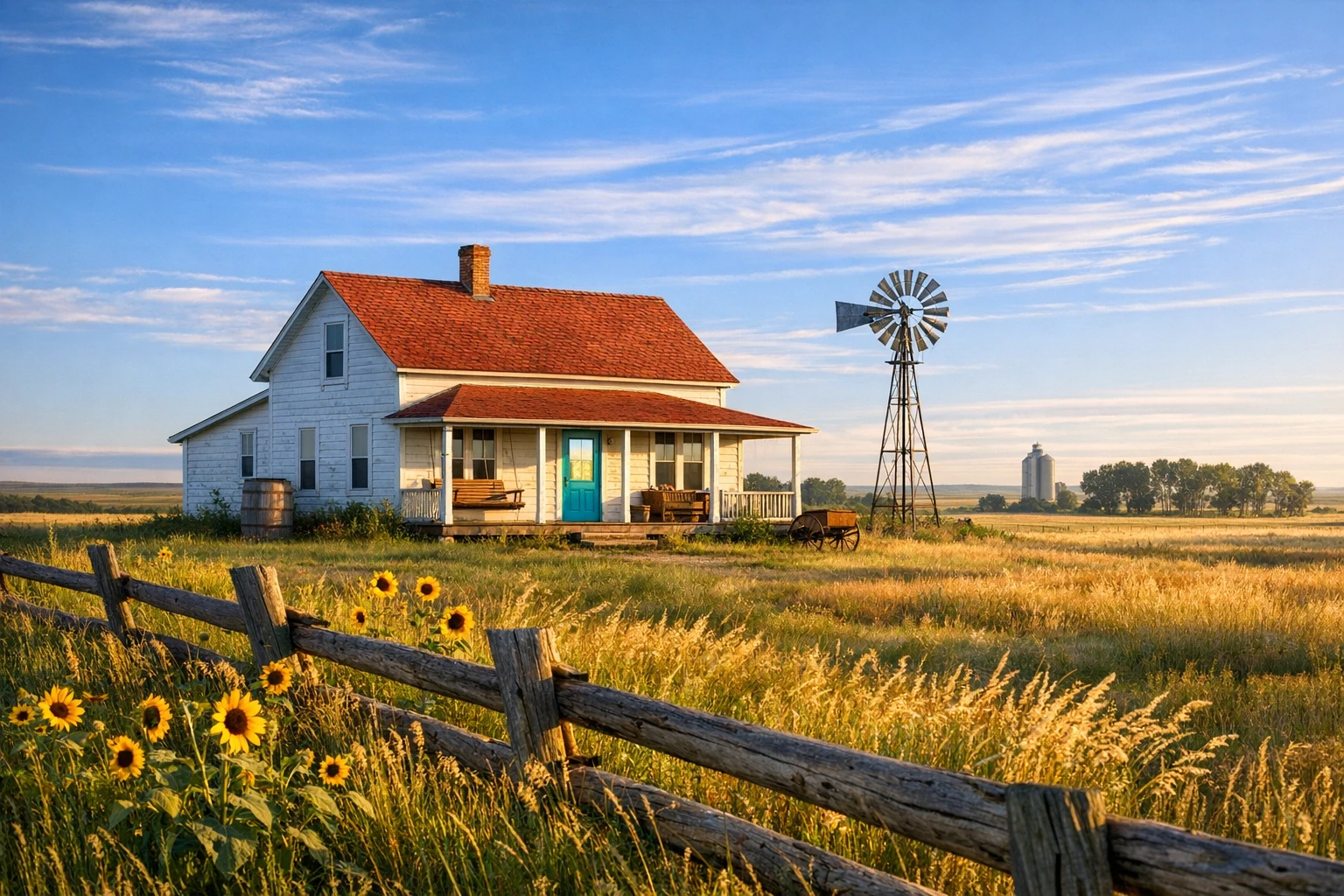
Rural America tells another part of the story. Many counties across the Great Plains, Appalachia, and parts of the Deep South have experienced population loss for decades. Younger residents often leave for education or work, older owners die, heirs live far away, and upkeep becomes expensive. A farmhouse may sit empty because no buyer wants a remote property with a failing roof and outdated systems. Unlike urban abandonment, which can cluster block by block, rural abandonment can feel scattered and lonely, with one silent house every few miles, each surrounded by fields or woods.
Several major forces appear again and again:
- Industrial decline and job loss
- Suburbanization and disinvestment in older neighborhoods
- Natural disasters such as floods, hurricanes, and fires
- Mortgage foreclosure, especially after the 2008 housing crisis
- Inheritance disputes, tax delinquency, and unclear title records
Natural disaster adds another layer. After Hurricane Katrina, parts of the Gulf Coast saw homes left in limbo for years because rebuilding costs, insurance disputes, and displacement kept owners from returning. Flood-prone river towns and fire-affected areas in the West have faced similar problems, though the visual result differs. In humid climates, structures may rot quickly; in drier areas, abandonment can preserve surfaces longer while still leaving a home functionally unusable.
It is also important to compare “abandoned” with “unoccupied.” Some homes are empty because they are seasonal residences, estate properties, or units waiting for renovation. Others are caught in legal complexity. A neglected house with tall grass may still have an owner paying taxes. Another may have no clear caretaker at all. That ambiguity matters because it shapes everything from neighborhood recovery to code enforcement. Seen together, abandoned houses form a map of economic shocks, demographic shifts, and policy gaps. They are not evenly distributed accidents. They are built evidence of how America has changed, one street and one county at a time.
3. What These Houses Reveal About Architecture, Memory, and Place
One reason abandoned houses fascinate so many people is that they preserve layers of local identity in a way few modern buildings can. Even after years of neglect, a house still speaks through its design. A New England mill town might hold narrow worker cottages close to former factories. The South may show shotgun houses, raised cottages, or weathered farm dwellings with deep porches built for heat and rain. In the Midwest, two-story foursquares and modest bungalows often dominate older neighborhoods. Out West, you may find ranch homes, mining cabins, or isolated homesteads marked by severe weather and distance. The architecture is never random; it reflects labor, climate, available materials, and the aspirations of the people who first lived there.
The details matter. A pressed-tin ceiling, a hand-built pantry, a coal chute, or a decorative newel post can date a property more effectively than many people expect. Even silence has clues. A missing staircase may suggest salvage. Thick newspapers under old carpet can reveal decades of makeshift repair. A locked bedroom in an otherwise empty house may point to probate, family conflict, or simply the fact that cleanouts happen in stages rather than in one dramatic moment. Popular culture often imagines abandoned houses as frozen time capsules, yet most are more uneven than that. Some are stripped for copper and fixtures. Others hold a confusing mix of treasured keepsakes and obvious junk.
Climate also changes the visual language of abandonment. In the humid South, mold, vines, and insects can reclaim a structure with startling speed. In snowy northern states, freeze-thaw cycles split masonry and buckle porches. Dry regions may preserve paint colors and paper labels longer, creating an illusion of stillness even when the building is structurally unsound. Each landscape writes decay in a different script.
There is a creative pull here that is easy to understand. Walking past an abandoned house can feel like passing the edge of a novel. A piano without strings, wallpaper faded to the color of old tea, a child’s height marks penciled beside a doorway: these things invite story. Still, the strongest interpretation is usually the simplest one. Most abandoned houses do not hide sensational secrets. They record ordinary lives interrupted by money, mobility, weather, aging, or bureaucracy. That is precisely what makes them compelling. They remind us that history is not only stored in monuments and museums. Sometimes it remains in a cracked front step, a sagging roofline, or a garden that continues to bloom long after the house itself has fallen quiet.
4. Safety Comes First: Physical Risks, Health Hazards, and Smart Boundaries
Any serious discussion of abandoned houses must move beyond atmosphere and address safety with total clarity. Empty buildings can be hazardous even when they look stable from the sidewalk. Floors may have rotted beneath intact carpet. Stair rails can detach with almost no pressure. Basements may contain standing water, exposed nails, broken glass, or contaminated materials. A roof that appears merely weathered may be one storm away from collapse. For that reason, abandoned properties are not casual adventure spaces, and entering one without permission is not a harmless thrill.
Health risks are just as important. Older houses frequently contain lead-based paint, especially those built before 1978. Properties renovated or constructed in earlier decades may also contain asbestos in insulation, flooring, pipe wrap, or ceiling materials. Disturbing those substances can release hazardous particles. Mold is another common problem, especially in damp climates or homes with roof leaks and plumbing failures. The Centers for Disease Control and Prevention notes that mold exposure can irritate the eyes, skin, throat, and lungs, with stronger effects for people who have allergies, asthma, or weakened immune systems.
Common hazards include:
- Unstable floors, porches, and staircases
- Lead paint dust and asbestos-containing materials
- Mold, animal droppings, and poor air quality
- Exposed wiring, chemical residues, and sharp debris
- Wildlife, insects, and unsecured wells or pits on rural properties
Even photographers, historians, or contractors who have legal access usually prepare carefully. Daylight matters. So does protective gear. Sturdy boots, gloves, flashlights, and in some cases hard hats or respirators are practical tools rather than dramatic props. Yet equipment does not erase structural danger. If a building feels wrong, it probably is. One weak landing or hidden hole is enough to turn curiosity into an emergency.
The safest approach is straightforward:
- Get explicit permission before entry
- Research the property and local conditions in advance
- Tell someone where you are going and when you expect to leave
- Avoid entering alone, especially on remote or unstable sites
- Leave immediately if you notice sagging floors, active fire damage, or chemical odor
For readers who are mainly interested in the subject rather than field visits, there are safer ways to engage. Public roads, local archives, county records, historical societies, and oral histories can provide rich insight without physical risk. That choice may sound less dramatic, but it is often more revealing. A deed book and a plat map can explain a house better than ten reckless minutes inside it. The mystery becomes more interesting when it is paired with caution, and that is the version of exploration worth keeping.
5. Legal Realities, Ethical Questions, and the Takeaway for Curious Readers
The law surrounding abandoned houses is often misunderstood. A building can look ownerless and still be private property. In the United States, trespass rules vary by state and municipality, but the general principle is simple: lack of occupancy does not create public access. Fences, signs, locked doors, and posted notices make that point obvious, yet even an open structure may still be protected. Some places treat unauthorized entry primarily as a civil matter, while others enforce criminal trespass statutes more aggressively. Penalties can become more serious if damage occurs, if tools are carried in a suspicious way, or if the property is part of a larger restricted site.
Photography brings its own nuance. Taking pictures from a public sidewalk or road is often lawful, provided no other law is violated, but crossing onto private land is a different matter. Drone use can introduce additional restrictions tied to federal aviation rules, local ordinances, and privacy concerns. Historic designation does not automatically mean a site is open to visitors. A house listed in a registry may remain privately owned, fragile, and fully off-limits.
Ethics matter just as much as legality. A responsible approach usually includes a few ground rules:
- Do not enter without permission
- Do not remove objects, fixtures, or documents
- Do not publish exact locations if exposure may invite vandalism or theft
- Do not treat former homes as entertainment detached from the people who lived there
- Do support preservation groups, land banks, archives, and local historians when possible
This last point is especially important for readers who feel drawn to abandoned houses because of their visual drama. Decay can be striking, but the camera should not flatten everything into mood. These are often places connected to grief, debt, displacement, and neighborhood change. A respectful article, photo essay, or research project acknowledges that reality. It asks who left, why they left, what systems failed, and what future options remain.
For the target audience of this topic, the best takeaway is balanced curiosity. If you are a traveler, look from lawful public vantage points and pair the image with local history. If you are a photographer, make permission and context part of your craft. If you are a historian or preservation-minded reader, follow the paper trail as closely as the visual one. Across America, abandoned houses are not merely eerie relics. They are clues to how communities rise, strain, scatter, and sometimes rebuild. Read them carefully, approach them legally, and you will see far more than a broken window and a dark hallway. You will see a country in transition, written in wood, brick, plaster, and absence.