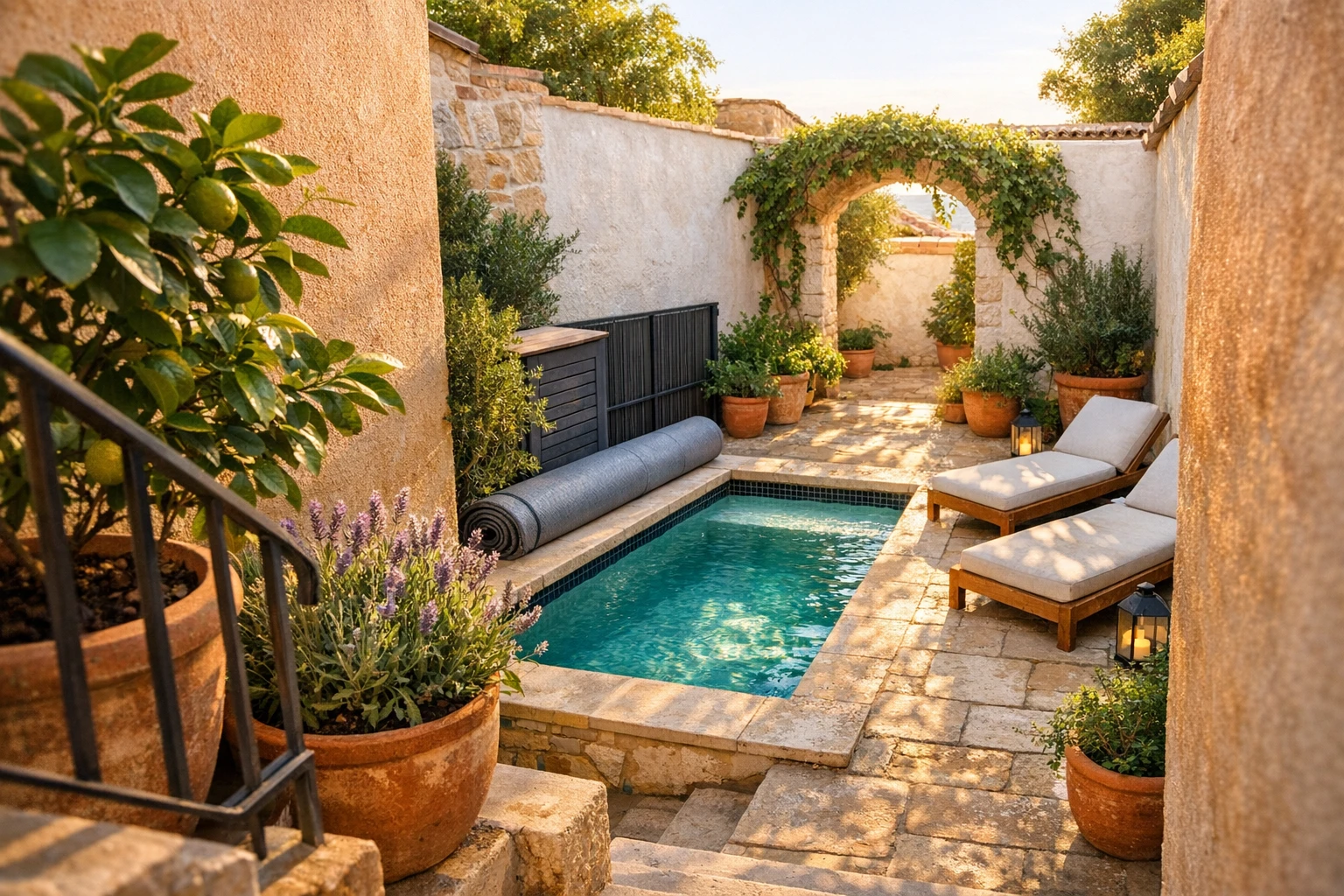
Plunge pools are becoming a popular option for homeowners looking to enjoy a pool without the space or cost of a full-sized one
Small yards, rising construction costs, and a growing taste for low-maintenance outdoor living have pushed plunge pools into the spotlight. They offer a compact way to cool off, relax, and add style without committing to the size, water use, or complexity of a full lap pool. Still, a modest footprint does not automatically mean a modest invoice. Understanding how materials, access, utilities, and design choices shape the budget is the difference between a satisfying project and an expensive surprise.
Article Outline
- Typical plunge pool price ranges and the budget categories homeowners usually encounter
- The main plunge pool types, with practical comparisons of cost, durability, and design flexibility
- Installation variables that can quietly add thousands to a project
- Operating, maintenance, and long-term ownership costs beyond the initial build
- Money-saving strategies that cut waste without cutting quality
1. What a Plunge Pool Really Costs: Budget Ranges and Where the Money Goes
A plunge pool can be less expensive than a full-size swimming pool, but the savings are not always as dramatic as first-time buyers expect. In many markets, a simple above-ground or portable plunge setup may begin around 10000 dollars, while a professionally installed inground plunge pool often lands somewhere between 20000 and 60000 dollars. High-end custom concrete builds with premium tile, heating, automation, and designer landscaping can move beyond 80000 dollars. The pool may look compact in the backyard, yet the invoice often behaves like a much larger project because excavation, permits, electrical work, drainage, and finishing details still need skilled labor.
One useful way to think about pricing is to split the budget into core construction costs and finishing costs. Core construction covers the shell, excavation, plumbing, electrical systems, filtration equipment, and labor. Finishing costs include decking, coping, fencing, landscaping, lighting, water features, and furniture. Homeowners are often surprised that the pool shell itself is only one part of the total. A beautifully installed plunge pool can resemble the center stone in a ring, while the surrounding features quietly account for a large share of the spending.
Typical budget items often include:
- Permits and inspections: roughly 200 to 2000 dollars, depending on location and code requirements
- Excavation and site preparation: often 1500 to 8000 dollars, but more where rock, slope, or drainage issues exist
- Electrical and plumbing connections: commonly 1000 to 5000 dollars
- Basic decking or hardscaping: frequently 3000 to 12000 dollars or more
- Heating or chilling equipment: often 2000 to 10000 dollars depending on type and capacity
- Safety fencing and barriers: highly variable, but often a required cost rather than an optional extra
Size also affects price, though not always in a perfectly linear way. A plunge pool that is a few feet larger may require more excavation, more concrete, larger pumps, or extra decking. Shape matters too. A clean rectangle is usually cheaper than a custom organic design with curved walls and built-in benches. Extras such as jets, integrated spa seating, LED lighting, automated covers, and glass tile can quickly shift a project from sensible to aspirational.
The key takeaway is simple: the headline number on a brochure rarely matches the final project total. Homeowners who build a realistic all-in budget from the start are less likely to stall halfway through the process or strip away important features at the last minute.
2. Comparing Plunge Pool Types: Fiberglass, Concrete, Vinyl, Precast, and Portable Options
The type of plunge pool you choose has a major influence on both upfront cost and long-term ownership. Some options are faster and more predictable, while others offer greater design freedom. The right choice depends on budget, site conditions, appearance, and how permanent you want the installation to be.
Fiberglass plunge pools are among the most popular choices for homeowners who want a balance of convenience and durability. These pools are manufactured off-site and delivered as a finished shell. Because the structure is preformed, installation is often quicker than concrete, sometimes taking days rather than weeks once the site is ready. The smooth surface is comfortable underfoot and generally resists algae better than rougher finishes. Fiberglass usually works well for homeowners who prefer predictable pricing and lower maintenance. The trade-off is limited customization. You are choosing from existing shapes and sizes, not sketching a completely new pool from scratch.
Concrete or gunite plunge pools offer the widest design flexibility. If you want a narrow courtyard pool, a dramatic dark interior finish, a built-in spa ledge, or a pool that wraps around unusual architecture, concrete is often the answer. It is also widely seen as a premium choice. That freedom comes with higher costs, longer installation schedules, and more maintenance over time. Concrete surfaces may need resurfacing after years of use, and the porous finish can require more chemical attention than fiberglass. Customization is the feast here, but it is rarely the cheap lunch.
Vinyl liner plunge pools can be an economical middle ground in some areas. They may cost less upfront than concrete and allow more shape flexibility than fiberglass. However, liners can puncture or wear out, and replacement becomes part of the long-term ownership equation. That means a lower initial price may be offset later by liner replacement and repair costs.
Other options occupy special niches:
- Precast concrete plunge pools can offer a controlled factory-made shell with a modern look and relatively fast installation
- Stainless steel or designer modular pools often appeal to high-end projects and rooftop or urban settings, but pricing can be steep
- Portable plunge tubs or stock-tank-style setups may cost far less, sometimes only a few thousand dollars, though they are not always comparable to a permanent pool in appearance, lifespan, insulation, or code compliance
For many homeowners, the practical ranking looks like this: fiberglass tends to win on speed and predictability, concrete wins on customization, vinyl can reduce upfront spend, and portable models win on entry price but not necessarily on permanence or resale appeal. Choosing well means matching the pool type to your real-life priorities, not to a photo that looked irresistible for five seconds on a screen.
3. Installation Factors That Can Raise or Lower the Final Price
If plunge pool quotes sometimes feel inconsistent, the site is usually the reason. Two homeowners can order pools of similar size and receive very different proposals because installation conditions affect labor, equipment, and risk. A simple site with easy access can keep costs under control. A cramped yard with tricky soil and strict local rules can send the budget climbing before the shell even arrives.
Access is one of the biggest cost drivers. If installers can easily bring in excavation equipment, deliver materials, and position the pool shell, labor tends to stay manageable. If the backyard is blocked by walls, narrow side paths, overhead power lines, or mature trees, the contractor may need smaller machinery, additional crew time, or even a crane. A crane lift can add several thousand dollars in one move, and that move may last only a few hours. It is the construction version of a swan: graceful from a distance, expensive underneath.
Ground conditions matter just as much. Digging through soft soil is very different from cutting into rock, managing a high water table, or stabilizing a slope. Challenging soil can require engineering, retaining walls, extra drainage, or reinforced construction. These are not decorative upgrades; they are structural necessities. Skipping them creates the kind of savings that later arrive disguised as repairs.
Other common installation factors include:
- Permit requirements and local building codes
- Mandatory fencing, alarms, covers, or barrier systems
- Distance from utility connections for water, gas, and electricity
- Need for upgraded electrical service or subpanels
- Drainage planning to prevent runoff, flooding, or soil movement
- Climate demands such as freeze protection, insulation, or winterization systems
Placement choices also affect cost. An above-ground or semi-inground plunge pool may reduce excavation and structural work. An inground installation usually looks more integrated and polished, but it can require more site preparation and finishing. Indoor plunge pools introduce another layer of complexity with ventilation, humidity control, and waterproofing. Heating is another budget pivot. A small pool heats faster than a large one, which sounds economical, but repeated use in colder months can still lead to meaningful energy costs if the system is undersized or the pool lacks a good cover.
The lesson here is clear: a plunge pool is never just a container of water. It is a construction project that must cooperate with the land, the house, local regulations, and your usage goals. The more accurately those factors are assessed before work begins, the fewer expensive plot twists you will face later.
4. Looking Beyond Installation: Maintenance, Energy Use, Repairs, and Home Value
The purchase decision should not stop at the installation quote. A plunge pool may cost less to maintain than a full-size swimming pool because it holds less water and usually needs fewer chemicals, but it still has ongoing expenses. Owners who plan only for construction often underestimate what it takes to keep the water clear, the equipment running, and the experience pleasant through different seasons.
Regular maintenance costs vary with climate, usage, and the amount of work you handle yourself. Homeowners who test the water, clean filters, and brush the surfaces on their own can spend substantially less than those who hire a weekly service. Annual chemical costs might fall in the range of a few hundred dollars for a lightly used, efficiently covered plunge pool, but heating can become the larger operating expense if the pool is kept warm for long periods. A compact body of water heats quickly, which is good news, yet it also loses heat quickly without insulation or a cover. That is why a heated plunge pool can feel wonderfully efficient one month and surprisingly costly the next.
Common ownership costs include:
- Water treatment chemicals and testing supplies
- Electricity for pumps, filtration, lights, and automation
- Gas or electricity for heating or chilling systems
- Filter cleaning or replacement
- Seasonal opening and closing, where relevant
- Repairs to liners, pumps, heaters, tile, or surface finishes
Long-term repairs depend heavily on the pool type. Fiberglass generally offers lower routine surface maintenance, while vinyl may eventually need a new liner. Concrete can be highly durable, but resurfacing is a meaningful future cost that should not be ignored. Equipment lifespan also matters. Pumps, heaters, salt systems, and control panels all have service lives, and replacing them is part of responsible budgeting.
Then there is the question many homeowners quietly ask: will a plunge pool add value to the property? The answer is, as always, it depends. In warm climates and design-focused neighborhoods, a well-integrated plunge pool can improve outdoor appeal and make a home stand out. In colder regions or highly practical markets, buyers may see it as a lifestyle feature rather than a value multiplier. It is better to view a plunge pool as a quality-of-life investment first, with resale potential as a possible secondary benefit. If you love the idea of stepping outside into a calm pocket of water at sunset, that experience has value even when it does not fit neatly into a spreadsheet.
5. Ways to Save Money on a Plunge Pool Without Sacrificing the Things That Matter
Saving money on a plunge pool is less about hunting for the absolute lowest quote and more about making disciplined choices early. The cheapest project on paper can become the costliest one in practice if it leads to delays, repairs, change orders, or features you wish you had not cut. Smart savings focus on reducing complexity, controlling scope, and investing in the elements that matter most to daily use.
One of the strongest money-saving decisions is choosing a standard shape and size. Rectangular pools, prefabricated shells, and commonly available finishes are usually less expensive than custom curves, unusual dimensions, and specialty materials. This is especially true with fiberglass, where selecting a stock model can reduce both design time and installation uncertainty. If your goal is cooling off, soaking, and enjoying a stylish outdoor area, a straightforward design often delivers most of the benefit without the premium price tag.
Timing can help as well. In some markets, contractors are busiest during spring and early summer. Planning the build during a slower season may produce better scheduling and, occasionally, more flexible pricing. It is also wise to separate must-haves from nice-to-haves before requesting quotes. A heater, safety cover, and durable decking may be essential. A water wall, fire feature, high-end automation package, and imported tile may be beautiful but optional.
Practical ways to save include:
- Choose a prefab fiberglass or precast model instead of a fully custom concrete design
- Keep the pool close to existing utility connections when possible
- Use simple paving or decking materials for phase one and upgrade landscaping later
- Request itemized bids so you can compare labor, materials, and optional add-ons clearly
- Bundle work with one qualified contractor when coordination savings outweigh subcontracting complexity
- Invest in an efficient cover to reduce heating, evaporation, and cleaning costs over time
- Handle easy post-installation tasks yourself, such as planting beds or assembling furniture, if you are comfortable doing so
At the same time, there are areas where saving money can backfire. Cutting corners on excavation, drainage, structural support, waterproofing, or licensed electrical work is rarely worth it. Those items sit behind the finished surface, which makes them easy to overlook and expensive to fix. A modest pool built correctly is usually a better outcome than a flashy concept balanced on weak preparation.
The best budget strategy is to decide what role the plunge pool will play in your life. If it is meant to be a cool retreat after work, prioritize comfort, water quality, and easy upkeep. If it is mainly a visual focal point, spend more on placement and finishes. When the budget aligns with the way you will actually use the space, the result feels less like a compromise and more like good judgment wearing sunglasses.
Conclusion for Homeowners Planning a Plunge Pool
Plunge pools can be a smart choice for homeowners who want the pleasure of water without the footprint, upkeep, or construction scale of a full-size pool. The most important lesson is that the real cost goes far beyond the shell: installation conditions, utilities, finishes, heating, and safety requirements often shape the final budget just as much as the pool type itself. Fiberglass usually offers speed and predictable pricing, concrete offers design freedom, and lower-cost alternatives can work well when expectations are realistic. If you are comparing options, focus on total project cost, long-term maintenance, and how the pool will fit your daily life rather than on the lowest advertised number. A carefully planned plunge pool can become a compact backyard escape that feels intentional, useful, and financially manageable for years to come.