A Guide to Walmart Pellet Grills
Pellet grills have opened the door for home cooks who want wood-fired flavor without babysitting a fire for half the day. Walmart matters in this category because it places entry-level and midrange models in front of shoppers who want to compare price, features, and convenience in one stop. A smart purchase, though, depends on more than a sale tag. Size, temperature control, cleaning design, and long-term fuel cost all shape whether a grill feels simple or stubborn after the first weekend.
1. Article Outline: What This Guide Covers and Why It Matters
Before getting lost in model numbers and colorful marketing language, it helps to map the subject clearly. This guide is built for shoppers who are standing at a practical crossroads: they want the smoky character of outdoor cooking, but they also want a machine that behaves more like an oven than a campfire. Walmart pellet grills attract exactly that kind of buyer. Some people are moving up from a basic charcoal kettle. Others are replacing an aging gas grill. Many are simply trying to decide whether pellet cooking is worth the extra cost. An outline is useful because it turns that big question into smaller and more manageable ones.
The article moves through five key areas that shape the buying decision. First, it explains what Walmart pellet grills usually represent in the market, including common brands, price bands, and the basic mechanics that make pellet cooking different from gas or charcoal. Second, it breaks down the specifications that matter most, such as cooking area, hopper size, temperature range, controller style, and construction quality. Third, it looks at actual cooking performance, because a grill can look impressive on paper and still disappoint when asked to smoke ribs on a windy afternoon or roast chicken for a weeknight dinner. Fourth, it covers ownership issues like assembly, cleaning, pellet storage, fuel use, and power requirements. Finally, it discusses how to shop smartly at Walmart, whether online or in store, and how to balance value against expectations.
Think of this outline as a trail map before entering a forest of product listings. Without it, many buyers focus only on the sticker price or the largest cooking area. That can lead to frustration later if the grill is hard to clean, struggles in cold weather, or takes up far more patio space than expected.
- What pellet grills are and how Walmart fits into the category
- Which specifications affect daily use the most
- How these grills perform across smoking, roasting, and high-heat cooking
- What maintenance and fuel costs look like over time
- How to decide whether a Walmart option matches your budget and routine
By the end, the goal is not to crown one universal winner. It is to help different kinds of shoppers make a better match. A family that cooks burgers twice a week will not need the same machine as someone who smokes brisket overnight. A small balcony setup will demand a different footprint than a wide backyard cooking station. That is where a good guide earns its place: not by shouting the loudest, but by helping the right grill meet the right cook.
2. Understanding Walmart Pellet Grills: Features, Brands, and Market Position
A pellet grill is essentially a wood-fired cooker with an automated feeding system. Hardwood pellets sit in a hopper, an auger moves them into a burn pot, and a fan helps maintain combustion while the controller regulates heat. This design is the reason pellet grills feel so approachable. You set a temperature, the system meters fuel, and the grill does much of the routine heat management on its own. That convenience is what draws many buyers to Walmart’s assortment. Depending on season, region, and inventory, Walmart often carries models from value-focused brands as well as better-known outdoor cooking names. Stock can shift, but shoppers will usually find a spread that includes beginner-friendly options, larger backyard units, and occasional portable or premium variations.
In broad terms, Walmart pellet grills tend to compete on accessibility. Entry-level units often sit in a price range that makes pellet cooking less intimidating than it once was. While pricing changes through promotions and seasonal turnover, budget and lower-midrange models commonly attract first-time buyers who want to test the category without diving into specialty-store pricing. That matters because pellet grills were once seen as a more expensive niche. Retailers like Walmart helped move them closer to mainstream backyard cooking.
There are, however, meaningful differences within that wide shelf. Some models prioritize basic digital controls and usable cooking space, which can be a good fit for casual cooks. Others include features like Wi-Fi connectivity, meat probes, slide-and-sear designs, or tighter temperature management. A model with more technology may be worth the added cost for people who plan to use the grill weekly, especially for longer cooks. On the other hand, a simpler unit may be perfectly adequate for chicken thighs, burgers, sausages, vegetables, and occasional racks of ribs.
Compared with gas grills, pellet grills usually offer stronger wood-smoke flavor and better low-and-slow capability, but they also need electricity and often take longer to preheat. Compared with charcoal, they are easier to control and less hands-on, though some purists still prefer the stronger smoke profile and direct-fire flexibility of charcoal pits. Walmart shoppers are often weighing exactly those tradeoffs.
- Gas grills: fast startup, straightforward heat, lighter smoke character
- Charcoal grills: strong flavor, more fire management, higher learning curve
- Pellet grills: automated control, steady heat, versatile cooking modes
The smart way to view Walmart pellet grills is not as one uniform category, but as a spectrum. Some are budget gateways into wood-pellet cooking. Others are feature-rich backyard machines that can handle family gatherings with ease. Once you understand that spectrum, the next step is deciding which specifications actually matter for your cooking style instead of paying for extras that look impressive and remain untouched.
3. How to Choose the Right Model: Size, Hopper Capacity, Controller Type, and Build Quality
Choosing a pellet grill is less about finding the biggest machine and more about matching specifications to your habits. The first number most shoppers notice is cooking area, usually measured in square inches. That figure matters, but it can be misleading if you do not picture your actual meals. A compact grill with roughly 300 to 500 square inches can be enough for couples, small families, or cooks who focus on weeknight meals. A larger unit in the 700-plus range makes more sense if you often host friends, cook multiple racks of ribs, or want space for side dishes at the same time. Bigger is helpful, but bigger also means more patio footprint, more pellets burned during warmup, and sometimes more cleanup.
Hopper capacity deserves equal attention. Many common consumer models offer somewhere around 10 to 24 pounds of pellet storage. A larger hopper can support longer sessions without refilling, which is useful for pork shoulder, brisket, or full-day smoking. If your cooking tends to stay under a few hours, a modest hopper may be completely fine. Likewise, the temperature range tells you whether the grill leans more toward smoking and roasting or can reach the higher heat needed for browning and crisping. Many pellet grills operate roughly from 180 degrees Fahrenheit up to 450 or 500 degrees, although performance at the top end varies by design.
The controller is another dividing line. Simpler controllers step through broad temperature increments and can be perfectly workable for casual use. More advanced PID-style systems adjust fuel delivery more precisely, often holding temperatures with less swing. In plain terms, that can mean steadier cooks and more confidence during longer smoking sessions. Wi-Fi control is convenient rather than essential, but it becomes genuinely useful when paired with food probes and app alerts. A phone notification will not make bad barbecue taste better, but it can save extra trips outside on a cold evening.
Build quality should never be an afterthought. Thick steel, solid legs, decent caster wheels, and a well-designed grease path improve ownership more than flashy badges. A grill that feels stable while moving and cleaning will usually be less frustrating over time. Look for lid fit, shelf sturdiness, and how ash and grease are managed. If the burn area is hard to access, routine maintenance becomes a chore, and neglect is what often shortens the life of a pellet cooker.
- Small household: prioritize compact footprint, easy controls, and moderate cooking area
- Weekend entertainer: look for a larger grate, stable cart design, and bigger hopper
- Frequent smoker: consider tighter temperature control, probes, and easier ash cleanup
- Value buyer: compare feature lists carefully instead of assuming the lowest price is the best deal
It also helps to think in scenarios. If you mainly cook burgers, wings, and chicken breasts, you may not need a large hopper or advanced controller. If you dream of overnight brisket cooks and holiday turkeys, you should care more about temperature consistency, pellet capacity, and the availability of replacement parts. The best Walmart pellet grill for you is the one that solves the problems you actually have. A practical fit beats a crowded spec sheet every time.
4. Cooking Performance in Real Life: Smoking, Roasting, Searing, and Everyday Convenience
This is where excitement meets reality. A pellet grill can be wonderfully versatile, but it is still important to understand what it does especially well and where it may ask for compromise. At low temperatures, pellet grills shine by offering steady heat for foods like ribs, pork shoulder, chicken, salmon, and even smoked vegetables. They are also very capable roasters. In fact, one of the quiet strengths of pellet cooking is how naturally it handles foods that benefit from even heat and a touch of smoke, such as whole chickens, meatloaf, casseroles, potatoes, and fruit crisps. In that sense, a pellet grill feels less like a one-trick smoker and more like an outdoor oven with personality.
High-heat performance is more variable. Some Walmart pellet grills include flame-broiling zones or sliding plates that expose food more directly to the fire. Others rely mainly on indirect heat, which is excellent for roasting but less dramatic for steakhouse-style searing. That does not mean you cannot cook steaks well. Many owners use a reverse-sear method: smoke the steak at a lower temperature until nearly done, then finish at the highest setting or on a separate hot surface. The result can be excellent, though it is a different workflow from dropping a steak over screaming charcoal.
Preheating time is another practical detail. Pellet grills usually need more patience than gas grills. Depending on the model and the target temperature, warmup may take roughly 10 to 20 minutes, sometimes longer in cold or windy weather. Pellet consumption also changes with temperature and climate. As a very general range, a grill may burn around half a pound to over two pounds of pellets per hour, with lower temperatures using less and hot-weather grilling usually being more efficient than winter cooking. Quality pellets matter too. Dry, well-made pellets burn more cleanly and consistently than damp or crumbly fuel.
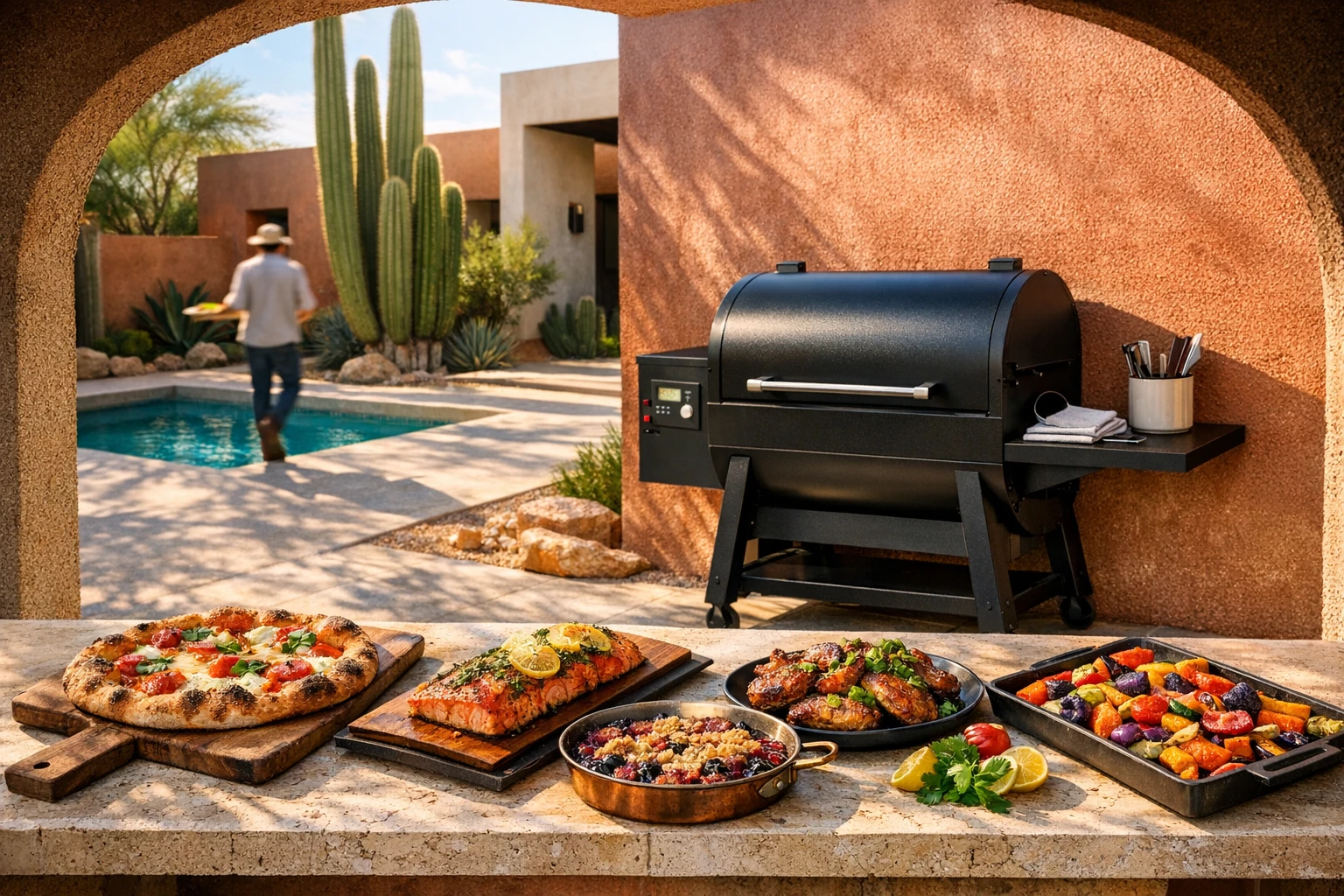
Flavor expectations should also be realistic. Pellet grills produce genuine wood-fired flavor, but the smoke profile is often gentler than that of stick burners or charcoal setups using wood chunks. For many households, that is actually a benefit. The flavor is present without dominating everything on the plate. It suits everyday cooking as well as weekend barbecue. Picture a tray of chicken wings taking on a bronze tint, or vegetables emerging with just enough smoke to make a Tuesday dinner feel like an event. That is the sweet spot many pellet grill owners love.
- Best uses: ribs, chicken, pork shoulder, turkey, vegetables, pizza, baked dishes
- Good but model-dependent: burgers, sausages, chops, steaks
- Important note: all pellet grills need electricity, so power access matters
When shoppers judge performance honestly, they tend to be happier with their purchase. A pellet grill is not a carbon copy of gas, charcoal, or an offset smoker. It occupies a useful middle ground: more flavor than gas, less effort than charcoal, and more convenience than a traditional wood-fired pit. For many Walmart buyers, that balance is the whole appeal.
5. Ownership, Maintenance, and Smart Walmart Buying Tips
Buying the grill is only the beginning. A pellet grill becomes a satisfying tool when the owner understands what routine care looks like and how to shop with long-term use in mind. Assembly is the first stage. Many pellet grills arrive in large boxes with multiple panels, legs, shelves, and hardware packs. The process is often manageable for one patient person, but it is easier with a second set of hands, especially when lifting the main body into place. Before tightening every bolt, it helps to align the frame carefully so the lid closes evenly and the wheels track properly.
Maintenance is not difficult, but it is not optional. Ash builds up in the burn area over time, and grease accumulates along trays and channels. If those areas are ignored, performance becomes less reliable and cleanup grows more unpleasant. A regular routine keeps the grill predictable. After several cooks, vacuuming ash from the fire pot area and wiping grease from surfaces can prevent ignition issues and flare-related mess. Lining drip trays in a way recommended by the manufacturer, checking bucket placement, and emptying grease before a long cook are small habits that pay off. Pellet storage matters too. Pellets absorb moisture easily, and damp pellets can swell, break apart, and feed poorly through the auger.
Fuel cost should also be part of the buying math. A grill with a low sale price can still become expensive to run if it burns pellets inefficiently or encourages frequent high-temperature cooking. That does not make pellet grilling unaffordable, but it does mean shoppers should think beyond the initial checkout screen. Accessories matter as well. A cover, quality pellets, a small ash vacuum, reliable tongs, and a good thermometer often improve the experience more than decorative upgrades.
- Check dimensions carefully, including lid clearance and shelf depth
- Look at hopper size if you plan to do long smoking sessions
- Read recent reviews for controller reliability and ease of cleaning
- Compare online-only models with in-store options, since inventory can differ
- Review current return, warranty, and parts policies before purchasing
Walmart can be appealing for this category because shoppers may catch seasonal discounts, bundles, or free-shipping offers that improve the overall value. Online listings usually provide wider selection and customer reviews, while in-store shopping lets you judge scale and construction more intuitively. Neither path is automatically better. If you know your measurements and preferred features, online shopping is efficient. If you are unsure how large a 700-square-inch grill really feels on a patio, an in-person look can save a mistaken purchase.
The final buying tip is simple: buy for your routine, not your imagination. If you cook for four people most weekends, choose a grill that handles that job gracefully. If you host neighborhood parties and love experimenting with brisket, invest in consistency and capacity. The best purchase is the one that keeps you using it. A grill that fits your life becomes part of dinner. A grill chosen for bragging rights often becomes an expensive weather station on the deck.
Conclusion for Walmart Pellet Grill Shoppers
If you are considering a pellet grill from Walmart, the smartest approach is to focus on fit rather than hype. Look closely at cooking space, controller quality, hopper size, cleanup design, and how often you will actually use the grill. For beginners, Walmart can be a practical entry point into wood-pellet cooking because it often combines approachable pricing with a range of models and features. For experienced backyard cooks, it can also be a worthwhile place to compare value, especially during seasonal sales. Choose with clear expectations, keep up with simple maintenance, and a well-matched pellet grill can turn ordinary meals into a far more enjoyable part of the week.