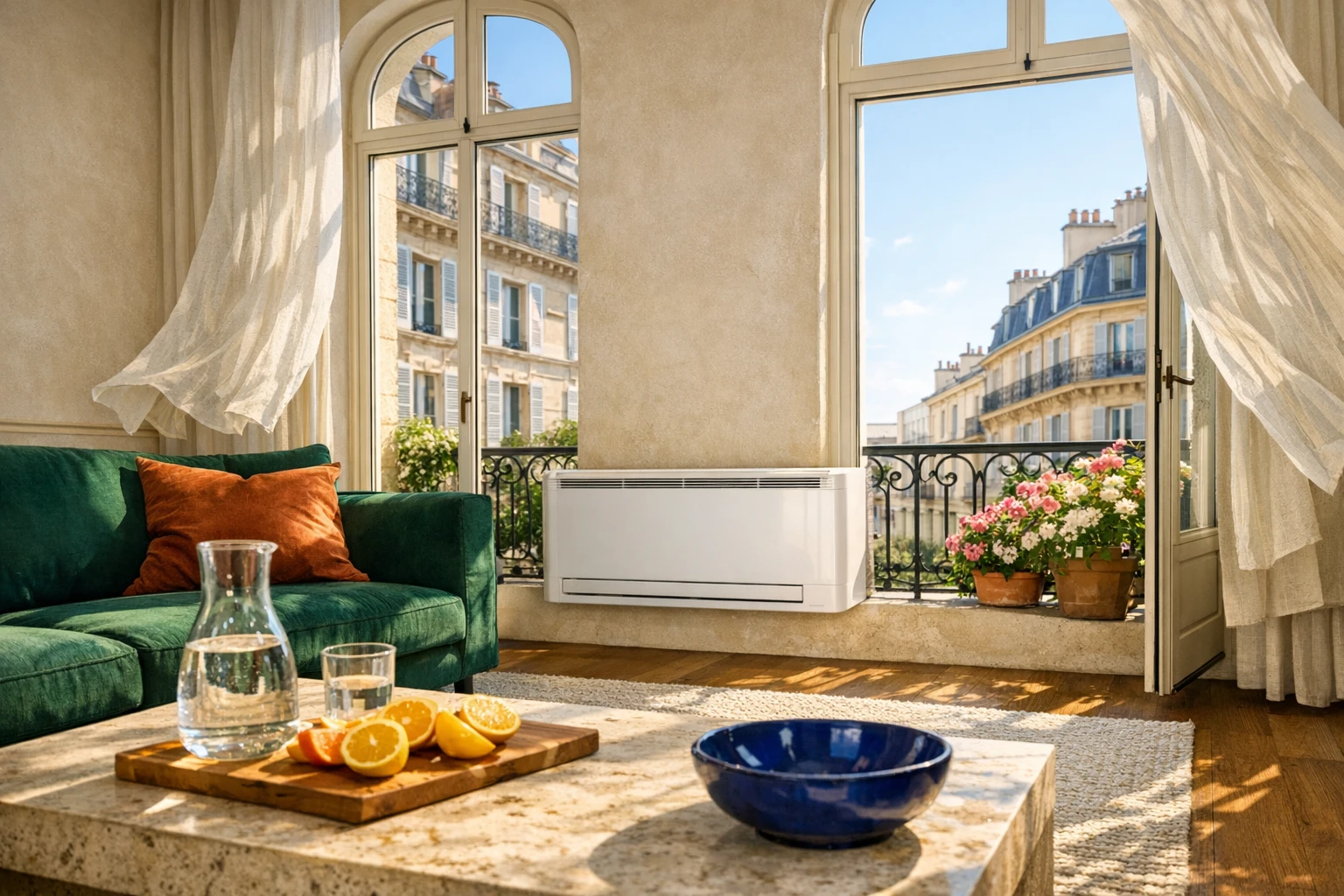
Air Conditioning Without an Outdoor Unit in 2026
Not every building welcomes a visible condenser, and not every homeowner wants drilling, scaffolding, or a conversation with the landlord that ends in silence. That is why no-outdoor-unit air conditioning is drawing fresh attention in 2026. The category now includes far more than the old noisy portable box: fixed monoblock units, smarter dual-hose designs, and niche water-cooled systems have all improved. Choosing well, however, still depends on room size, heat load, noise tolerance, and the rules written into the walls around you.
Outline: • What “without an outdoor unit” really means in practice • The main technologies available in 2026 and where each one fits • Real-world differences in cooling power, sound levels, and energy use • Installation, ownership costs, servicing, and building restrictions • Practical recommendations for renters, apartment owners, renovators, and small-business users
What Air Conditioning Without an Outdoor Unit Really Means in 2026
The phrase sounds simple, but it can be slightly slippery. In everyday conversation, “air conditioning without an outdoor unit” usually means a system that does not use a separate external condenser box mounted on a wall, balcony, or roof. That matters in apartment buildings, protected historic façades, dense urban streets, and properties governed by strict condominium rules. In those places, a conventional split system may be difficult to approve, visually undesirable, or flatly prohibited.
In 2026, this category mainly includes three serious directions. First, there are fixed monoblock wall units, sometimes called splitless air conditioners. These keep the refrigeration circuit in a single indoor body, while exchanging heat through vents cut through an outside wall. Second, there are portable air conditioners, which are easier to deploy but often noisier and less efficient, especially in single-hose form. Third, there are niche solutions such as water-cooled packaged systems or through-the-wall packaged units, which can work well in specific building types. The important point is this: “no outdoor unit” does not mean “no interaction with the outside world.” Heat still has to go somewhere.
That distinction is especially relevant for buyers comparing products online. Some ads blur the line between true air conditioners and evaporative coolers. An evaporative cooler can lower perceived temperature in dry climates by moving air through water, but it does not remove heat in the same way a compressor-based air conditioner does. In humid weather, its effect can be modest. A real AC, whether split, monoblock, or portable, both cools and dehumidifies. That dehumidification is not a side note; it is often the difference between a room that merely blows air around and a room that feels genuinely livable during a sticky summer evening.
Several trends have pushed interest higher by 2026. Hotter summers are an obvious driver, but not the only one. More people are working from home, more homes are being renovated rather than rebuilt, and more local regulations are focusing on visual impact, refrigerants, and energy performance. Buyers are also more informed than they were a few years ago. They now ask better questions: • Can this system cool a sun-exposed room, not just a shaded one? • What is the real sound level at night mode, not only the marketing headline? • Does it need wall penetrations, a condensate drain, or regular tank emptying? • Can it heat in shoulder seasons, or is it cooling only?
Seen clearly, the 2026 market is less about novelty and more about fit. No-outdoor-unit systems are not miracle machines, yet they solve a very real problem: how to achieve meaningful cooling where a classic external condenser is impractical. The best choice begins with honest expectations, because the technology is competent, but never magic.
Main System Types: Monoblock, Portable, Water-Cooled, and Packaged Alternatives
If the category is growing, it is also becoming more fragmented, and that is good news for buyers who take time to compare. The first major type is the fixed monoblock wall-mounted unit. Think of it as the closest substitute for a split system when an external condenser is off the table. The compressor and heat exchanger are housed indoors, while two wall openings connect the unit to the outside air. Many models in this segment are designed for single rooms such as bedrooms, home offices, living rooms, or small studios. Typical capacities often sit in the range used for individual spaces rather than whole homes. In return, these systems usually offer better efficiency, cleaner aesthetics, and lower day-to-day hassle than portable models.
The second type is the portable air conditioner, still the most familiar face in the room. It wins on convenience. You can buy one, roll it home, connect an exhaust hose to a window kit, and start cooling the same day. That ease explains its popularity among renters and short-term users. Yet the portable category is also where disappointment often lives. Single-hose units remove indoor air and expel it outside, which can create negative pressure and pull warm air back in through gaps. Dual-hose designs are generally better because they separate intake and exhaust paths, improving real-world performance. Even so, portable units tend to be louder because the compressor is in the room with you. Cooling capacity numbers can also be confusing, so buyers should look at regionally relevant ratings and not just the largest headline figure on the box.
A third path is the water-cooled or hydronic-adjacent packaged system. These are more specialized. In some buildings, especially commercial or multi-unit properties, a water loop or approved plumbing arrangement can support a compact indoor unit without a traditional outdoor condenser. Such systems can be effective, but they require a much more careful review of building services, installation rules, and maintenance responsibilities. This is not the grab-and-go option; it is the engineered option.
Then there are through-the-wall packaged units, familiar from many hotels and some older apartment blocks. They are not always elegant, and they do require an opening through the wall, but they remain relevant because the outdoor components are integrated into one package rather than mounted as a separate condenser. In certain retrofits, especially where wall sleeves already exist, they can be practical and cost-effective.
Each type has a distinct personality: • Fixed monoblock: strongest fit for owners wanting a permanent, cleaner-looking solution • Portable AC: best for flexibility, temporary use, and lower upfront commitment • Water-cooled packaged systems: suited to niche buildings with compatible infrastructure • Through-the-wall packaged units: useful where the building layout already supports them
In 2026, one more detail matters: refrigerant transition and efficiency standards. Depending on region, buyers will increasingly encounter lower-GWP refrigerants and better inverter-based control. That does not erase the physics, but it does mean the latest generation of no-outdoor-unit cooling is more mature than the clunky reputation the category once carried. The field is now broad enough that “Which type?” is a far better first question than “Do these even work?”
Performance, Noise, Efficiency, and Comfort: The Real-World Comparison
Cooling performance is where marketing language meets a warm room and has to prove itself. In 2026, the best way to compare no-outdoor-unit systems is to focus on four practical outcomes: how fast the room cools, how stable the temperature stays, how much noise the unit produces, and how expensive the comfort is over a season. A machine can look impressive on paper and still feel underwhelming if it is oversized for humidity control, undersized for solar gain, or simply too loud for sleeping.
Fixed monoblock systems usually perform better than portable units in comfort consistency. Because they are installed permanently and engineered around through-wall air exchange, they often manage heat removal more cleanly than a single-hose portable fighting against room pressure. Many premium models also use inverter compressors, which allow the system to modulate output instead of cycling harshly on and off. That can improve both efficiency and comfort, especially in bedrooms or offices where people notice temperature swings quickly. When the afternoon sun hits a west-facing wall, steady control matters more than heroic claims.
Portable air conditioners remain useful, but buyers should understand their compromises. A typical portable unit may have enough nominal capacity for a small or medium room, yet its effective performance can drop if the exhaust setup leaks heat back inside or if the window kit is poorly sealed. Dual-hose models reduce some of that penalty and are generally the better technical choice. Even then, portables tend to be the loudest option because fan noise and compressor noise are both inside the living space. For light sleepers, that can be decisive. A unit that cools well but sounds like a small workshop after midnight may not feel like progress.
Noise figures deserve careful reading. Manufacturers often publish sound levels measured at low fan speed or under partial load. Real use can be louder. Premium fixed units may offer relatively quiet low-speed modes, while portable units frequently operate at noticeably higher indoor sound levels under active cooling. The difference is not trivial. In practical terms, a quieter system changes behavior: you leave it on longer, you use it at night, and you stop thinking about it. That is the invisible luxury of good climate control.
Efficiency is equally important, especially as electricity prices remain a household concern in many places. In general, the hierarchy is predictable: • Permanent fixed systems tend to be more efficient than portable units • Inverter-driven models usually manage part-load operation better than fixed-speed designs • Dual-hose portables are typically more sensible than single-hose versions • Correct sizing improves efficiency more than many buyers realize
Comfort also involves dehumidification, airflow direction, and controls. A room at 25°C with reduced humidity can feel far better than a room at 23°C that still feels damp. Smart thermostats, app controls, occupancy scheduling, and maintenance alerts are now common enough in 2026 to influence buying decisions, but they should come after fundamentals. First make sure the unit can handle the room volume, insulation level, glazing, equipment heat, and occupancy. Then look at the digital extras. A smart app cannot rescue an underpowered machine any more than a polished dashboard can make a slow car climb a hill faster.
Installation, Costs, Maintenance, and Building Rules Before You Buy
The purchase price is only the visible tip of the iceberg. Beneath it lie the practical questions that decide whether a no-outdoor-unit air conditioner becomes a relief or a regret. Installation requirements vary dramatically by system type. A portable unit is the easiest entry point: wheel it in, vent it through a window or sliding door kit, manage condensate according to the model, and you are operating. For renters, that simplicity can outweigh every efficiency disadvantage. But a fixed monoblock unit is a different story. It typically needs wall penetrations for air exchange, careful sealing, proper condensate handling, and enough structural suitability to mount the unit safely. In multi-story buildings, access and drilling can affect labor cost more than the unit itself.
Cost ranges in 2026 still vary widely by country, building type, and installer availability, but the pattern is consistent. Portable units usually have the lowest upfront cost, while fixed monoblock systems sit higher because installation is specialized. Water-cooled or niche packaged solutions can move into a more technical and therefore more expensive bracket, especially when plumbing or building approvals are involved. Buyers should compare total ownership cost, not only sticker price. A cheaper unit that uses more electricity, creates more noise, and needs replacement sooner may not be the bargain it first appears to be.
Maintenance is another dividing line. Portable units often require regular filter cleaning and, in some cases, condensate management depending on operating mode and humidity. Fixed systems usually need filter cleaning as well, plus periodic professional servicing to maintain performance and check refrigeration components. A neglected AC slowly turns into a tired machine: airflow drops, noise rises, efficiency slips, and the room never feels quite right. Good maintenance is less glamorous than smart controls, but far more valuable.
Before buying, confirm the rulebook around your walls: • Do local building rules allow exterior grilles or wall penetrations? • Does your landlord or condominium association require written approval? • Is there a noise limit that applies at night? • Can condensate be drained legally and safely? • Is the electrical circuit adequate for startup current and continuous load? • Will servicing be possible without unusual access equipment?
Historic buildings deserve special caution. Even when a system has no separate outdoor condenser, visible grilles on the façade may still require approval. The same goes for short-term rentals or leasehold apartments where permanent modifications are restricted. On the other hand, some owners discover a pleasant surprise: a fixed monoblock can be acceptable precisely because it avoids the visual impact of a bulky exterior unit.
The most sensible buying process is straightforward. First, calculate the room’s cooling need using area, ceiling height, insulation, window orientation, and occupancy. Second, decide whether the unit must be removable, semi-permanent, or fully installed. Third, compare sound levels, seasonal efficiency, and service access. Finally, check legal and building constraints before payment, not after delivery. It is a little like tailoring a suit. Measurements first, fabric second, style third. Reverse that order, and comfort becomes expensive.
Who Should Choose One in 2026? Practical Recommendations and Conclusion
Air conditioning without an outdoor unit is not a single answer for everyone; it is a family of compromises, and the right compromise depends on who you are. For renters, the strongest candidates are usually portable systems, especially dual-hose models if window arrangements allow them. They are not the quietest or most efficient tools in the box, but they are mobile, comparatively accessible, and easy to take with you. If your priority is surviving a hot season in a leased flat without permanent alterations, that flexibility carries real value.
For apartment owners, long-term residents, and people renovating one or two critical rooms, a fixed monoblock unit often makes more sense. It usually costs more to install, yet it can deliver a more settled daily experience with better aesthetics, steadier performance, and lower annoyance. Bedrooms, home offices, and living areas where noise matters are often the places where the extra investment pays back in comfort rather than in a strict financial spreadsheet. You notice the difference not only on the hottest day, but in the ordinary evenings when the room cools quietly and stays that way.
Small businesses and professional spaces also deserve a mention. Boutique shops, treatment rooms, studios, and compact offices sometimes need reliable cooling where façade changes are limited or building ownership is shared. In such settings, a permanent splitless or packaged solution can be easier to justify than a portable unit that looks temporary and sounds busy. For commercial users, appearance and acoustic comfort are part of the product, not an afterthought.
Here is a practical shortcut for the target audience: • Choose portable if you need speed, mobility, and low commitment • Choose fixed monoblock if you want a durable room-by-room solution with better comfort • Choose specialized water-cooled or packaged systems only when the building clearly supports them and a professional has reviewed the setup • Avoid confusing evaporative coolers with true compressor-based air conditioning if humidity is a real issue in your climate
The headline conclusion for 2026 is reassuring. You no longer need to treat “no outdoor unit” as a second-rate category by default. The better products are capable, and in the right room they can be genuinely satisfying. The wiser view is more precise: these systems are excellent for targeted cooling, awkward buildings, and retrofit situations, but they still demand honest sizing and careful installation choices. If you are a renter seeking quick relief, a homeowner navigating strict façade rules, or a renovator trying to preserve the look of a building, there is likely an option worth considering. Start with the room, the rules, and the noise you can live with. From there, the best choice becomes much easier to hear, and much easier to live with.