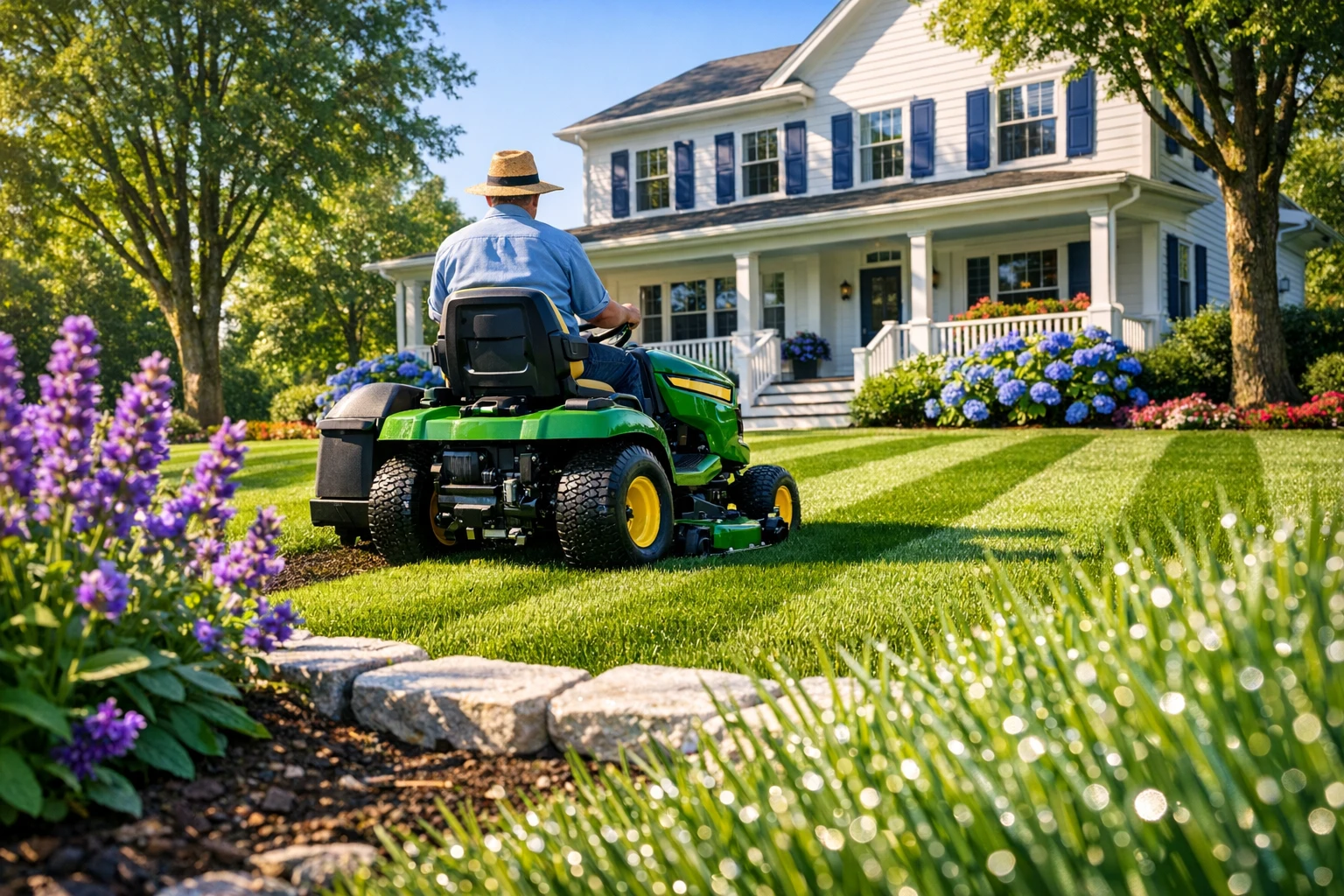
Rent-to-Own Mowers: How They Work and What to Consider
A mower is one of those tools that becomes urgent the moment the grass starts racing ahead of your weekend plans. Rent-to-own options offer immediate access without a large upfront payment, which can appeal to homeowners, landlords, and small crews. Yet flexibility is only useful when you understand the full cost, the contract rules, and the upkeep responsibilities. Before you shake hands or click checkout, it helps to know exactly what you are getting into.
Outline: What This Guide Covers and Why the Topic Matters
Rent-to-own mowers sit at the intersection of convenience, budgeting, and practical lawn care. For many households, the issue is not whether a mower is useful, but whether the cost can fit into the month without upsetting every other bill. That is why this topic matters. A yard does not pause while you save for equipment, and seasonal growth can turn a manageable lawn into a knee-high headache surprisingly fast. At the same time, a payment plan that looks friendly on day one can become expensive when spread across months of fees, optional protection plans, and missed-payment penalties.
This article starts with a simple goal: to replace vague sales language with a clearer picture of how these agreements function in real life. The first part explains the basic structure of rent-to-own programs, including ownership transfer, payment schedules, and what happens if a customer changes course. The next part compares total cost against other paths, such as paying cash, using store financing, or buying a used mower locally. After that, the focus shifts to contract details, maintenance duties, repair rules, and the warning signs that should slow any buyer down.
To keep the guide practical, the article also highlights who may benefit from this arrangement and who might be better served by another option. That matters because a homeowner with a small suburban yard has very different needs from someone maintaining several rental properties or a large rural lot. A light push mower, a self-propelled model, a riding mower, and a zero-turn machine belong to very different pricing worlds, and that changes the decision.
- How rent-to-own agreements are structured
- Where the real cost adds up over time
- How these plans compare with standard financing
- Which contract terms deserve the closest reading
- How to decide whether the arrangement fits your lawn, income, and timeline
Think of this outline as a map before the first pass across the field. The mower may be the machine, but the contract is the terrain. Knowing both makes for a far smoother ride.
How Rent-to-Own Mowers Work in Practice
At its core, a rent-to-own mower agreement lets you take the equipment home right away and pay for it over time through scheduled rental payments. Unlike a standard purchase made with cash, the mower does not become yours immediately. Unlike a traditional installment loan, the arrangement is often framed as a rental with an option to own after completing all required payments or using an early purchase option. That difference sounds small, yet it shapes everything from your rights to your final cost.
In many cases, the process begins with selecting a mower category that matches your property. For a compact yard, that might be a basic electric or gas push mower. For a half-acre or more, shoppers often look at self-propelled models or lawn tractors. Large, open properties may push the conversation toward riding mowers or zero-turn units. After choosing a machine, the provider sets a payment schedule, which may be weekly, biweekly, or monthly. Some companies offer same-day approval with limited credit history checks, which is one reason these plans attract buyers who need equipment quickly.
A typical agreement often includes these elements:
- An initial payment or processing charge
- A recurring rental payment schedule
- A total amount required to gain ownership
- Terms for early purchase, return, or reinstatement after missed payments
- Rules covering damage, loss, routine care, and replacement parts
The appeal is easy to understand. If your old mower quits in peak growing season, waiting months to save for a replacement may be unrealistic. Rent-to-own fills that gap. It can also help buyers who want predictable smaller payments instead of a single large expense. A homeowner facing a $2,500 riding mower, for example, may prefer a series of monthly charges even if the total paid over time is higher.
Still, the practical reality deserves close attention. Ownership usually arrives only after every required payment is made. If the contract runs for a year or longer, you may spend significantly more than the cash price. If you miss payments, some providers allow reinstatement; others may require additional fees or repossession of the equipment, depending on the agreement and local rules. In plain language, rent-to-own buys time more than it buys savings. That trade can be worthwhile, but only when the customer understands that flexibility is the feature and extra cost is often the price of admission.
Comparing the Real Cost With Buying Outright, Retail Financing, and Used Equipment
The single biggest mistake shoppers make with rent-to-own mowers is focusing only on the size of each payment. A small weekly or monthly number can feel manageable, especially when compared with the sticker shock of a new machine. Yet lawn equipment is one of those purchases where the total paid matters far more than the comfort of the first invoice. A mower that seems affordable at $25 per week may look very different when that amount continues long enough to push the final cost far beyond the cash price.
General market pricing helps frame the decision. A basic corded or entry-level battery mower may cost a few hundred dollars. A solid gas self-propelled mower commonly falls in the mid-hundreds. Riding mowers often start around the low thousands, while zero-turn models can rise sharply depending on engine size, deck width, and build quality. When rent-to-own charges are layered across many months, the final amount can exceed the original retail price by a wide margin. Exact numbers vary by provider, brand, and term length, but it is common for the convenience premium to be substantial.
To compare fairly, it helps to place four paths side by side:
Buying outright: Usually the lowest total cost if you have savings available. You own the mower immediately and can often shop broadly for sales, used units, or seasonal discounts.
Retail financing or a credit card promotion: This may cost less than rent-to-own if the interest rate is reasonable or a promotional period is paid off on time. The downside is that approval standards may be stricter.
Buying used: This can be a strong value option, especially for simple walk-behind mowers. However, mechanical condition matters a great deal, and repair risk is higher if you buy from a private seller without inspection.
Rent-to-own: Best for immediate access when cash is tight and conventional financing is unavailable or undesirable. The trade-off is usually the highest total cost.
There are also indirect costs. Gas mowers need fuel, oil, filters, and tune-ups. Battery mowers may eventually need replacement batteries, which can be expensive. Riding mowers introduce belts, blades, tires, batteries, and more complex maintenance. If your agreement makes you responsible for upkeep from day one, the payment plan covers acquisition, not ownership freedom.
A useful question is not merely, “Can I afford the payment?” It is, “What will I have paid by the time this machine is mine, and would another path get me similar mowing ability for less?” If the answer shows only a modest premium, the convenience may be worth it. If the math reveals a steep markup, the smarter move may be to buy a used mower, repair your current one, borrow equipment for a few weeks, or delay the purchase until a cash deal becomes possible.
Contract Terms, Maintenance Duties, and Common Red Flags
A mower can look sturdy on the showroom floor, but the contract beside it is where the real weight sits. Rent-to-own agreements are not automatically bad, yet they demand slower reading than many shoppers give them. The goal is not to hunt for hidden traps in dramatic fashion. It is simply to understand who carries the risk, what happens when circumstances change, and how much freedom you actually have while making payments.
Start with the total cost and ownership path. The agreement should clearly state the cash price, the number of payments, the full amount paid if you complete the term, and any early purchase option. If these details are hard to find or explained in vague language, that is reason to pause. A good contract should also specify whether taxes, delivery, setup, and protection plans are included or charged separately. Small line items can quietly swell the final bill.
Maintenance responsibility deserves just as much attention. Many rental-purchase arrangements place routine care on the customer. That can include blade sharpening, oil changes, fuel management, battery charging practices, air filter replacement, and proper storage. If you are renting a riding mower, the list may expand. Neglect can lead to breakdowns, and the contract may say that damage caused by poor maintenance is your responsibility rather than the provider’s.
Look closely at these areas before signing:
- Late fees and the exact point at which a payment is considered late
- Reinstatement rules if you fall behind and want to continue the agreement
- Return conditions if you decide the mower no longer fits your needs
- Responsibility for repair costs caused by wear, misuse, or accidents
- Whether insurance or loss-damage waivers are optional or effectively required
- Any automatic renewal language or add-on services bundled into the contract
There are also practical red flags that have nothing to do with legal wording. If a salesperson avoids discussing total cost, rushes you away from paperwork, or pushes a machine far larger than your yard requires, step back. A quarter-acre lot rarely needs a commercial-grade zero-turn, no matter how appealing the image may be. If the machine is used or refurbished, ask about service history, blade condition, hours of use, battery age, and any warranty support. If the provider cannot answer basic questions about the equipment, confidence should not increase.
Consumer protections vary by location, so it can be wise to review local rules on rental-purchase agreements, repossession, and cancellation rights. Even without legal expertise, one habit helps tremendously: take the paperwork home if possible, read every page, and run the numbers in private. Grass may grow quickly, but signing too fast can make the season more expensive than it needed to be.
Conclusion: Who Should Consider Rent-to-Own and How to Decide Well
For the right buyer, a rent-to-own mower is a practical bridge between immediate need and limited cash flow. It can make sense for someone whose mower failed at the worst possible moment, whose property must be maintained regularly, and whose access to conventional financing is weak or unavailable. It may also help a landlord, caretaker, or small side-hustle operator who needs equipment now and values payment flexibility more than the lowest total price. In that setting, the arrangement solves a real problem: the lawn gets cut, the property stays presentable, and the expense is spread over time.
Still, that does not make it the automatic best choice. Buyers with savings, access to lower-cost financing, or a good local used market will often find a more economical path elsewhere. The key is to match the payment structure to the urgency of the need. If the yard can wait a few weeks, saving for a cash purchase may produce a far better outcome. If the grass is already staging a takeover and no better option is available, rent-to-own can be a useful fallback rather than a first instinct.
Before deciding, use a simple checklist:
- Measure your yard and choose the smallest mower class that can do the job efficiently
- Compare the cash price with the full rent-to-own total, not just the periodic payment
- Ask whether there is an early purchase discount and calculate that amount too
- Confirm who handles maintenance, repairs, and replacement parts
- Read the late-payment, return, and reinstatement rules carefully
- Check the condition and service history if the machine is not brand new
- Compare one or two alternative paths before signing anything
The target audience for this topic is not looking for abstract theory. It is looking for a mower that works, a contract that makes sense, and a budget that stays intact. If that sounds like you, the smartest move is to treat rent-to-own as a tool, not a shortcut. Used wisely, it can keep your lawn under control without demanding a large lump sum. Used carelessly, it can turn a simple equipment purchase into a long and costly obligation. The goal is not to fear the option or glorify it. The goal is to understand it well enough to choose with confidence, keep the yard in shape, and avoid paying for convenience blindly.