Costco Grill Sale: A Practical Guide for Shoppers
Costco grill sales attract everyone from first-time backyard cooks to seasoned hosts who already know the scent of charcoal and the speed of propane. The real opportunity is not simply finding a lower price, but matching cooking style, patio space, fuel preference, and long-term upkeep with the right model. This guide maps the sale from a shopper’s point of view, helping you compare options calmly, avoid flashy distractions, and buy for the way you actually cook.
Article Outline
- How Costco grill sales typically work and why they draw so much attention.
- The main grill categories shoppers often compare, from gas and charcoal to pellet and griddle models.
- The features that define real value, including materials, warranties, cooking area, and bundled extras.
- Smart shopping tactics for timing, store visits, online orders, delivery, assembly, and returns.
- A practical conclusion that helps different kinds of shoppers narrow their choice with confidence.
1. Understanding the Costco Grill Sale Landscape
A Costco grill sale matters because it often brings together three things shoppers care about at the same time: recognizable product categories, warehouse-style pricing, and bundled value. In many markets, grill inventory becomes more visible in spring and early summer, when outdoor cooking shifts from an occasional hobby to a weekly ritual. That does not mean every sale follows the same calendar or features the same products. Stock can vary by region, by warehouse size, and by whether you are shopping in-store or online. Some shoppers walk in looking for a basic propane model and leave thinking about pellet smoking. Others arrive focused on price and discover that accessories, delivery, or warranty terms change the picture entirely.
This is why a Costco grill sale deserves a practical lens rather than a purely emotional one. A grill is not just another seasonal purchase; it is part cooking tool, part gathering place, and part long-term maintenance commitment. A deeply discounted unit may still be a poor fit if it is too large for your patio, too heavy to move, or too specialized for the meals you actually make. By contrast, a slightly pricier bundle can offer better long-term value if it includes a cover, a fuel starter setup, or sturdier construction.
Shoppers are often drawn to these sales for a few consistent reasons:
- Warehouse retailers may package grills with useful extras instead of selling every accessory separately.
- Large-format stores can carry models aimed at family cooking, entertaining, or backyard gatherings.
- Online listings may expand the selection beyond what fits on the warehouse floor.
- Seasonal merchandising can create short windows where comparison shopping becomes easier because several models are visible at once.
Still, the most important lesson is that a sale price alone does not tell the full story. Two grills can sit in the same aisle with similar price tags and deliver very different ownership experiences. One may offer better heat retention, a more stable cart, and grates that clean up with less effort. Another may look impressive but rely on thinner materials that show wear sooner under heavy use. The smart shopper treats the sale as an opportunity to compare, not as a shortcut around comparison. Think of it less like a race to the register and more like a quiet backyard rehearsal before the first real cookout.
2. Comparing the Main Types of Grills You May See
One reason Costco grill sales feel exciting is that they often place very different cooking styles side by side. Gas grills, charcoal grills, pellet grills, and griddle-style cookers can all seem appealing in the abstract, yet each one serves a different kind of cook. If you understand the strengths and tradeoffs of each category, the sale becomes easier to navigate and far less overwhelming.
Gas grills are often the default choice for convenience. They heat quickly, offer relatively straightforward temperature control, and suit weeknight cooking when no one wants to spend extra time coaxing a fire to life. A typical family-oriented gas grill may provide roughly 500 to 700 square inches of combined cooking space, which is enough for burgers, vegetables, and a second zone for indirect heat. For shoppers who value speed and familiarity, gas is usually the easiest on-ramp. The tradeoff is that some cooks find the flavor profile less distinct than charcoal or wood-based options.
Charcoal grills appeal to people who enjoy the process as much as the food. They can deliver a smoky character many grill fans love, and they often excel at high-heat searing when managed well. Yet they demand more attention. Lighting time, ash cleanup, and airflow control all become part of the experience. If your idea of a perfect Saturday includes tending coals and tweaking vents like a patient musician tuning an instrument, charcoal can be deeply rewarding. If your goal is simply dinner in under 30 minutes, it may feel like too much ceremony.
Pellet grills occupy an interesting middle ground. They use compressed wood pellets and digital controls to offer more hands-off temperature management, making them attractive for low-and-slow cooking, ribs, pork shoulder, and smoked chicken. Many models can also roast and bake effectively, which gives them broader versatility than some new shoppers expect. The tradeoff is cost, both upfront and ongoing, since pellets and electrical components add complexity.
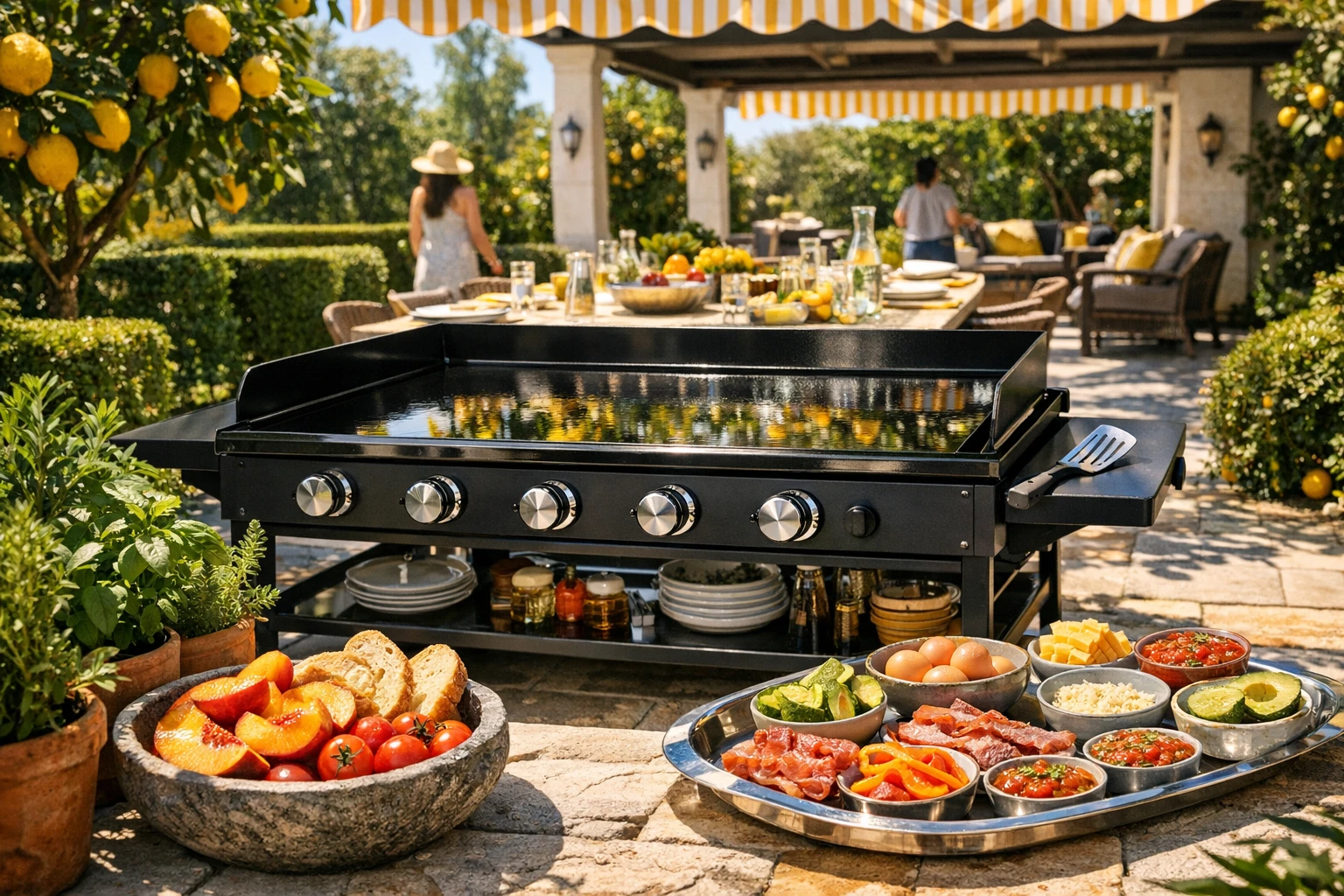
Griddle-style outdoor cookers have also grown in popularity. They are excellent for breakfast spreads, smash burgers, fajitas, and foods that benefit from a broad, flat cooking surface. They do not replace a traditional grill for every buyer, but they can be a strong option for households that cook mixed meals for groups.
A practical comparison looks like this:
Gas: easiest startup, good for frequent casual use, usually simple to manage.
Charcoal: strong flavor potential, more hands-on, often slower to begin and clean up.
Pellet: versatile and convenient for smoking, but generally more expensive.
Griddle: broad meal flexibility, excellent for delicate or small foods, different from classic open-grate grilling.
The right choice depends less on what looks impressive in the aisle and more on what lands on your table each week. A shopper who mostly grills chicken breasts, vegetables, and sausages may thrive with propane. Someone dreaming of brisket and wood smoke may regret settling for the quickest option. The sale is most useful when it helps you discover not only what you can afford, but what kind of outdoor cook you want to be once the receipt is forgotten.
3. How to Judge Value Beyond the Sale Price
The phrase “grill sale” naturally puts attention on the number printed on the tag, but experienced shoppers know value hides in the details. A lower price can be attractive, yet the better question is what that price actually buys in terms of durability, performance, convenience, and ownership costs over time. Two models may differ by a modest amount at checkout while diverging sharply over three summers of use.
Start with materials. Stainless steel sounds reassuring, but not all stainless components are equal. Thickness, finish quality, and the grade used in key areas can affect corrosion resistance and longevity. Fireboxes, burners, heat tents, grates, lids, and cabinet panels all deserve a quick look. Heavy grates usually retain heat better and can produce stronger sear marks, while thinner parts may warp or discolor sooner. Even the wheels and handle construction matter more than many buyers expect, especially if the grill will be moved often.
Next, consider cooking performance without getting trapped by marketing language. BTU numbers can be useful, but they are not the whole story. High output alone does not guarantee even heat, efficient fuel use, or better results. Cooking area, burner layout, lid design, and heat distribution all influence performance. A well-designed grill with moderate output can outperform a more powerful-looking model that creates hot spots. If possible, inspect how the burners are arranged and whether the grill supports two-zone cooking, warming, or indirect heat.
Bundled value also deserves close attention. A package that includes a fitted cover, rotisserie kit, side shelves, tool hooks, or a fuel starter accessory can be genuinely useful if you would have bought those items anyway. On the other hand, bundled extras are not meaningful if they sit unused in the garage. The best bundles reduce future spending rather than simply increasing the box count.
Use a checklist like this when comparing models:
Construction: Does the grill feel sturdy when you open the lid or move the cart?
Cooking surface: Is the size realistic for your household and entertaining habits?
Heat control: Can you create different temperature zones?
Cleanup: Are grease management and ash handling simple enough for regular use?
Warranty: What is covered, for how long, and on which components?
Storage: Is there room for tools, tanks, pellets, or trays where needed?
Warranty terms are especially important because grills combine heat, weather exposure, and moving parts. Burners, ignition systems, electronics, and painted surfaces can age differently. A useful warranty is not just about length; it is about clarity. Shoppers should verify which components have the longest protection and whether support comes from the manufacturer, the retailer, or both. Finally, do not forget the hidden costs: propane refills, pellet supplies, replacement grates, cleaning tools, covers, and assembly time. A smart purchase feels good at checkout and still feels sensible after the first season, when rain, grease, and frequent weekend meals have had their say.
4. Smart Shopping Strategies: Timing, Inventory, Delivery, and Returns
A Costco grill sale can reward shoppers who arrive with a plan. Timing matters, but not in a simplistic way. Many buyers focus only on the first wave of warm-weather inventory, when selection is often broader and the newest seasonal models are easier to find. That can be a good time to buy if you want the widest choice. However, later-season periods may offer better markdown potential on certain remaining units, though selection can narrow significantly. In other words, early shopping favors choice, while later shopping may favor bargain hunting. The best time depends on whether your priority is a specific grill type or the lowest possible price on whatever remains.
In-store and online shopping can also feel like different experiences. Warehouse floors let you inspect cart stability, shelf space, handle comfort, grate thickness, and overall footprint. That physical impression matters more than many people expect. A grill that looks compact online may dominate a small deck in real life. Conversely, online listings can reveal broader inventory, detailed specifications, and delivery options not visible in the store. For many shoppers, the best approach is hybrid: inspect similar units in person, then compare online details before purchasing.
Before buying, work through a few practical questions:
How much space do you actually have once the lid is open and people are moving around?
Will the grill need to pass through a gate, doorway, or narrow side yard?
Do you want to assemble it yourself, or would a delivery and assembly option save frustration?
Will you need a cover immediately because the grill lives outdoors year-round?
Are fuel and replacement parts easy to find in your area?
Membership and policy details also deserve attention. Costco shopping generally depends on current membership access, and shoppers should always review the retailer’s latest terms for shipping, returns, and product-specific exceptions before placing an order. Policies can change, and large outdoor items may involve delivery windows, freight handling, or packaging conditions that affect convenience. If a grill arrives partially assembled or requires significant setup, make sure you understand what is included. A sale price can lose some charm if the assembly process consumes an entire Saturday and three trips to the toolbox.
Finally, compare with a calm mind. Sales create urgency by design, but urgency is not the same as suitability. If you measure your space, define your fuel preference, set a budget range, and decide which features matter most, you are far less likely to buy a grill that dazzles for ten minutes and disappoints for five years. The right shopping strategy turns the sale from a noisy event into a manageable decision. That may not sound glamorous, but it is often the path to the most satisfying backyard purchase.
5. Conclusion for Shoppers: Choosing the Right Grill with Confidence
For most shoppers, the ideal outcome of a Costco grill sale is not merely saving money; it is ending up with a grill that fits real life. That means thinking about habits before hardware. If you cook quick dinners several times a week, a reliable gas grill is often the most practical answer. If you enjoy the ritual of live-fire cooking and do not mind extra setup and cleanup, charcoal can deliver an experience that feels more hands-on and expressive. If your outdoor cooking dreams include slow-smoked meats, weekend experimentation, and a little digital convenience, a pellet grill may justify the higher cost. If your family loves breakfast outdoors, chopped vegetables, or diner-style meals, a griddle may be the sleeper choice that becomes the household favorite.
The most useful buying framework is surprisingly simple:
Choose the fuel type that matches your routine, not the one that looks trendiest.
Buy the size you can realistically use and store, not the biggest box on the floor.
Judge the construction and warranty as carefully as the sale sign.
Count accessories only if they solve a need you already have.
Verify delivery, assembly, and return details before clicking or loading the cart.
Shoppers who approach the sale this way are more likely to feel satisfied long after the promotion ends. They are not just reacting to a seasonal display; they are building a practical outdoor cooking setup that suits their budget, space, and style. In that sense, the smartest purchase is often the one that feels slightly less dramatic in the store but far more useful at home. The grill that quietly lights fast, cooks evenly, cleans up without complaint, and fits your patio may bring more lasting happiness than the flashy model with features you never touch.
So if you are heading into a Costco grill sale, take a tape measure, a short checklist, and a clear sense of how you like to cook. Let the sale widen your options, not cloud your judgment. A good deal is satisfying for a day; a well-chosen grill can improve dinner for years. That is the kind of value worth bringing home.