Trends in Prefabricated Wooden Homes
Prefabricated wooden homes have shifted from a niche idea to a serious answer to modern housing pressure. Rising labor costs, stricter energy targets, and the need for shorter construction schedules have pushed off-site timber building into the spotlight. Buyers now see options that range from compact cabins to polished family houses with striking architecture. That makes this topic relevant for anyone trying to understand where housing design, construction, and sustainability are heading.
Rather than treating prefab timber housing as a single trend, it helps to break the subject into the forces shaping demand, the design language gaining popularity, the materials and manufacturing methods making it possible, the financial realities behind the promise, and the long view that matters to owners and professionals.
- The rise of prefab wood homes in a changing housing market
- Design directions that are redefining the look and feel of factory-built living
- Engineered timber, precision manufacturing, and building performance
- Cost, speed, financing, and the practical economics of prefab
- What sustainability goals, regulations, and future demand mean for the next decade
The Rise of Prefabricated Wooden Homes in a Changing Housing Market
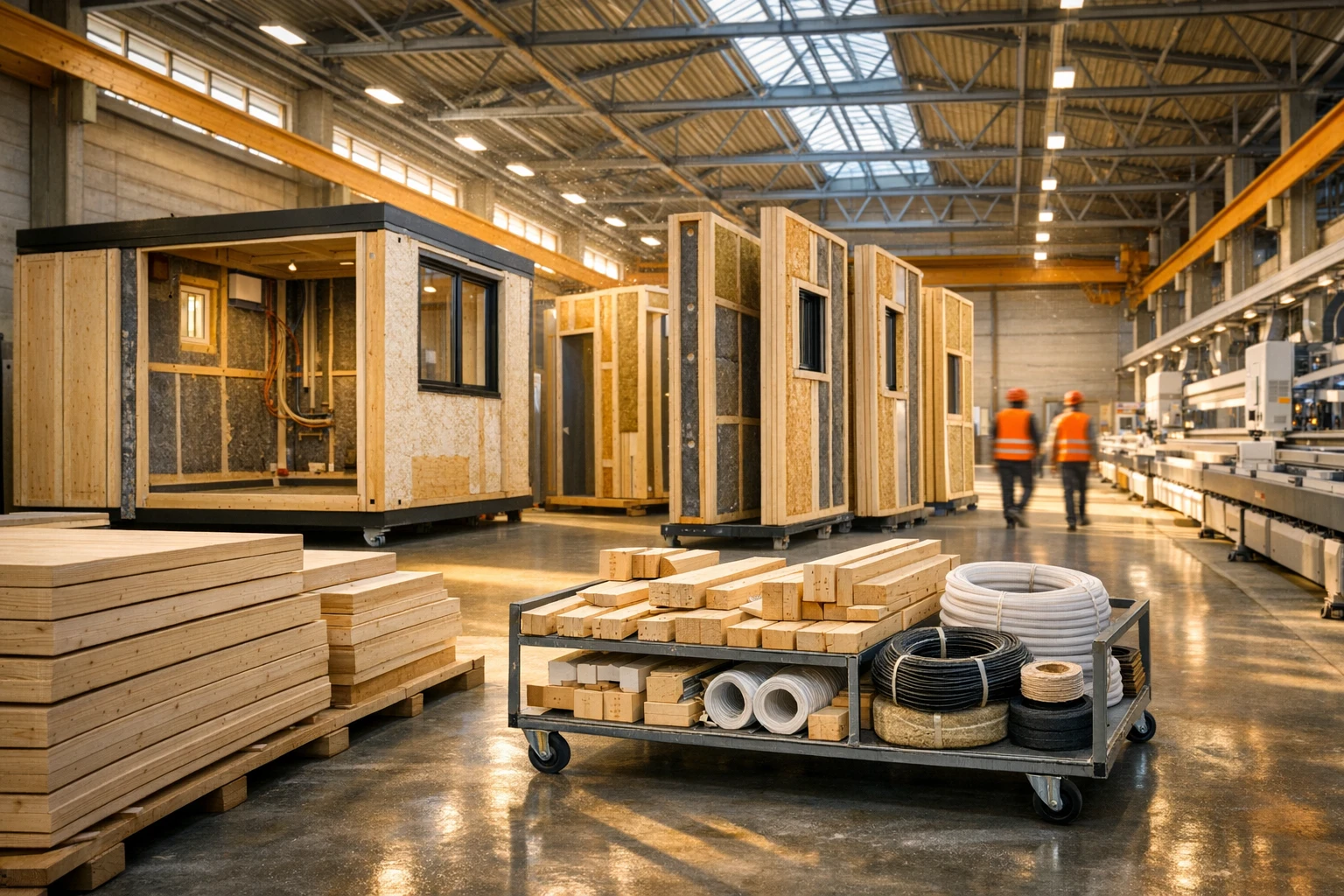
Prefabricated wooden homes are gaining momentum because they answer several problems at once. In many regions, the housing market faces a difficult mix of high land prices, shortages of skilled labor, rising material costs, and pressure to deliver homes faster. Traditional construction, while flexible, often struggles with schedule overruns, weather delays, and inconsistent quality from one site to the next. Prefabrication offers a different rhythm. Much of the work happens in a factory, where components or modules are built in controlled conditions and then assembled on site. That shift can reduce exposure to rain, wind, and cold, while giving builders tighter control over tolerances and sequencing.
Wood plays a central role in this trend because it combines versatility with a lighter structural weight than many competing materials. For detached homes, accessory dwelling units, vacation properties, and even some multi-unit projects, timber systems can be easier to transport and quicker to erect. A finished wall panel or volumetric module often arrives with insulation, windows, wiring pathways, and interior finishes already planned, which compresses the on-site timeline. In practice, many prefab projects can shorten the visible site phase by weeks or even months compared with a fully site-built equivalent, although the total project length still depends on permitting, site preparation, utilities, and transport logistics.
Another reason these homes are moving into the mainstream is image. The prefab wooden house of today is no longer defined by a single rustic style. Manufacturers now offer clean Scandinavian lines, contemporary flat-roof forms, farmhouse-inspired designs, compact urban infill units, and highly customized family layouts. This broadened aesthetic range has expanded the customer base. Younger buyers are drawn by efficiency and design clarity, retirees often like predictable timelines, and developers appreciate repeatable production models.
Several market forces are reinforcing the shift:
- Growing demand for faster housing delivery
- Interest in low-carbon building materials
- Advances in digital design and CNC fabrication
- Consumer acceptance of modular and panelized construction
- The search for better quality control in a volatile labor market
There is also a psychological element at work. A prefab wooden home suggests that housing can be made with the logic of good product design: carefully tested parts, fewer surprises, and a clearer path from concept to completion. That promise does not erase complexity, but it explains why the sector has moved from the edge of the market toward the center of housing conversations.
Design Trends: From Utility Boxes to Warm, Flexible Living Spaces
One of the most striking changes in prefabricated wooden homes is visual. Early prefab housing was often judged by a narrow stereotype: boxy rooms, limited finishes, and an unmistakable sense that compromise had been built into the walls. That picture is now badly out of date. Contemporary manufacturers have realized that buyers are not only comparing prefab homes with other prefab homes; they are comparing them with architect-designed residences, renovated older houses, and the polished imagery of social media. As a result, design has become one of the industry’s strongest selling points.
Current projects lean toward simplicity without feeling bare. Open-plan kitchens and living areas remain popular, but the better designs use careful zoning rather than one large undefined room. Sliding partitions, built-in storage walls, pocket doors, and flexible secondary rooms allow smaller footprints to work harder. In many floor plans, a guest room can double as a study, a loft can serve as a reading nook or sleeping area, and a mudroom can absorb the clutter that makes compact living feel cramped. This adaptability matters because many buyers want homes that can respond to remote work, changing family sizes, or seasonal use.
Natural light is another defining theme. Large windows, clerestories, glazed corners, and direct access to terraces are especially common in prefab wooden homes because timber construction pairs naturally with warm interiors and indoor-outdoor continuity. Designers often highlight exposed wood ceilings, slatted wall details, and muted palettes that let grain, texture, and daylight do most of the storytelling. The effect can feel calm without becoming generic.
Some of the most visible design trends include:
- Biophilic interiors with exposed timber, soft tones, and connections to the landscape
- Compact, high-function layouts that reduce wasted circulation space
- Customizable facades using charred wood, vertical cladding, metal accents, or fiber cement panels
- Multi-generational planning with private bedroom wings or secondary entrances
- Accessory dwelling units and backyard studios built from repeatable module types
There is also a growing split between two design directions. One favors minimal, cabin-like forms with efficient footprints and modest budgets. The other aims higher, using prefab methods to deliver premium architecture with carefully detailed joins, high-performance glazing, and tailored interiors. Both are part of the same story. Prefab wooden homes are no longer asking buyers to choose between speed and personality. Instead, the most successful models treat the home as a kit of possibilities, where precision manufacturing supports rather than flattens the character of the design. It is this blend of warmth, flexibility, and visual confidence that has given timber prefab housing a much wider cultural appeal.
Material and Manufacturing Innovation Behind the Trend
Design may catch the eye, but material innovation is what gives prefabricated wooden homes their current momentum. Over the past decade, timber construction has benefited from major advances in engineered wood products, digital modeling, and factory production systems. These changes have made prefab homes more precise, more durable, and more capable of meeting demanding performance targets. In other words, the attractive exterior is only the visible part of a deeper technical story.
Engineered timber products such as cross-laminated timber, glued laminated timber, laminated veneer lumber, and precision-made wall cassettes have widened the design and structural possibilities of wood construction. Not every prefab home uses all of these systems, but many manufacturers now combine standard framing with insulated panels, airtight membranes, and factory-installed openings to improve consistency. Compared with traditional site framing, factory-built components are cut with computer-controlled tools, which reduces dimensional variation and can lower material waste. Some builders report notable waste reductions in factory settings because offcuts are easier to manage and repeated designs allow tighter material planning.
Digital tools matter just as much as physical materials. Building information modeling, CNC cutting, and integrated design software help teams coordinate structure, mechanical systems, window placements, and service runs before a unit reaches the site. That planning can reduce clashes between trades and improve assembly speed. A prefab home often behaves like a carefully choreographed sequence: the walls know where they are going before the truck leaves the factory.
Performance is another reason buyers are paying attention. Properly designed prefab wooden homes can achieve strong thermal performance because factory conditions allow tighter air sealing and better insulation placement. Many models are built to exceed local energy codes, and some aim for passive house or near-passive standards. Key technical advantages often include:
- Improved airtightness from factory-controlled assembly
- Higher insulation accuracy in wall and roof systems
- Reduced thermal bridging through optimized panel design
- Better moisture management through preplanned detailing
- Repeatable quality assurance checks before delivery
There are still common questions about fire, moisture, acoustics, and longevity. Those concerns deserve serious treatment rather than marketing slogans. Modern timber systems can meet rigorous fire standards when designed with correct assemblies, charring calculations, linings, and sprinkler strategies where required. Moisture risks remain real, but they can be managed through transport protection, rainscreen detailing, ventilation, and disciplined installation. Acoustic performance depends on floor build-ups, insulation, and separation details, especially in multi-unit settings. The larger trend is clear: prefabricated wooden homes are benefiting from technical maturity. What used to be sold mainly as a charming alternative is increasingly being specified as a high-performance building system.
Cost, Speed, Financing, and the Practical Economics of Prefab
Few topics generate more curiosity than cost, and prefab wooden homes are often surrounded by half-truths. Some people assume they are always cheaper than conventional houses; others assume the factory label automatically makes them expensive. The reality sits somewhere between those extremes. Prefabrication changes where money is spent, how risk is managed, and when payments are due. A well-planned prefab project can produce meaningful savings through faster schedules, less site waste, and more predictable labor allocation, but it can also face added expenses related to transport, cranes, site access, foundations, and customization.
The strongest economic argument for prefab is not always the lowest sticker price. It is often the combination of schedule certainty and cost control. In a traditional build, delays can ripple across the entire process. Weather interrupts framing, trades arrive out of sequence, and change orders pile up. In prefab, much of the labor is front-loaded in a controlled environment, which can reduce on-site uncertainty. If a buyer is carrying land costs, paying rent during construction, or financing a developer timeline, a shorter and more predictable build window has real financial value.
Still, buyers need to look beyond the base package. A catalogue price may cover the house structure while leaving out major line items such as excavation, utility connections, permits, engineering, delivery, assembly, kitchens, decks, and landscaping. Financing can also be more complex than for a standard home because some lenders are still adjusting to factory-based payment schedules. Instead of funding a long sequence of on-site stages, the bank may need to release money during manufacturing, before the house is fully assembled on the property.
Important cost drivers usually include:
- Level of customization versus use of standard models
- Transport distance and road access for large modules or panels
- Foundation complexity and site slope
- Local permitting and inspection requirements
- Interior specification levels, from basic to premium
Comparisons with conventional construction should also account for labor market conditions. In areas with severe trade shortages, prefab can be relatively more attractive because it reduces the amount of skilled work needed on site. For developers, repeatable house types or row-house formats can improve purchasing efficiency and shorten sales cycles. For individual buyers, the value often lies in predictability: clearer timelines, fewer unknowns, and a product that has been assembled under controlled conditions. Prefab wooden homes are not a magic discount machine, but they are increasingly competitive when the full project picture is considered. The smartest buyers treat them like a system, not a shortcut.
What the Next Wave Means for Buyers, Builders, and Developers
The future of prefabricated wooden homes will be shaped by more than style or convenience. The biggest long-term forces are sustainability targets, carbon accounting, housing shortages, building code evolution, and the search for resilient supply chains. Timber has become central to these conversations because wood stores carbon during tree growth and generally carries a lower embodied carbon profile than more energy-intensive structural materials, especially when sourced responsibly. That does not make every timber building automatically sustainable, but it gives prefab wood housing a strong place in the broader move toward lower-impact construction.
Environmental performance is becoming more measurable, not just more fashionable. Buyers increasingly ask about insulation values, airtightness, ventilation, healthy interior materials, and lifecycle impacts. Developers are under pressure to document emissions, waste, and operational efficiency. Prefabrication fits this direction well because factory production is easier to monitor, standardize, and refine over time. As regulations tighten, repeatable high-performance assemblies may become even more valuable than dramatic architectural gestures.
Another trend worth watching is the expansion of prefab wood beyond single-family homes. Townhouses, small multi-family buildings, student housing, senior living, and hospitality projects are all exploring timber-based off-site systems. This matters because scale can help manufacturers improve throughput, stabilize pricing, and invest in better production technology. As the sector grows, buyers may see more mature warranty structures, clearer certification pathways, and stronger lender familiarity.
For different audiences, the practical takeaway is slightly different:
- Homebuyers should focus on total project cost, energy performance, and the builder’s installation track record
- Architects should evaluate prefab timber as a design framework rather than a creative limitation
- Developers should study repeatability, local code pathways, and transport logistics early
- Policy makers should look at prefab wood housing as one tool for faster, lower-impact housing supply
The central lesson is simple. Prefabricated wooden homes are no longer interesting merely because they are prefabricated or wooden. They matter because they sit at the intersection of speed, design quality, resource efficiency, and changing buyer expectations. For readers considering a project, the most useful approach is to ask sharper questions: Which system fits the site, what level of customization is realistic, how will the home perform over time, and which promises are backed by proven delivery? The trend is real, but the winners will be the people who look past the brochure and understand the system behind it. That is where the future of prefab timber housing becomes not just appealing, but practical.