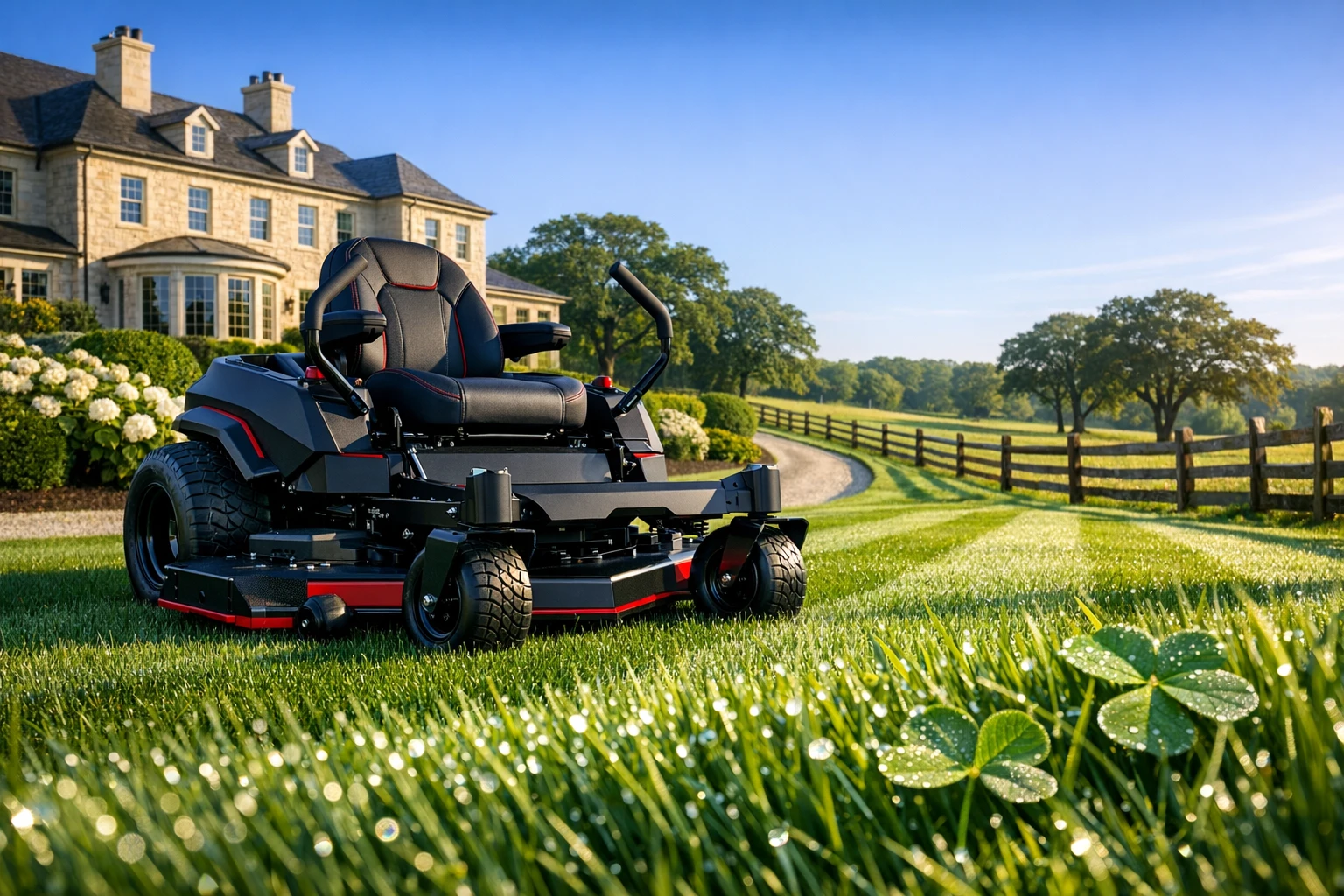
Zero Turn Mowers Rent to Own: What to Know Before You Commit
Buying a zero turn mower can feel like standing at the gate of a bigger property dream: faster cuts, cleaner lines, and fewer hours lost to slow weekend mowing. Then reality steps in, because these machines often carry a price that makes even prepared buyers pause. Rent-to-own plans sound like a practical middle path, offering immediate use while spreading payments over time. This article explains how those deals work, what they may truly cost, and which details deserve close attention before you commit.
Outline
- How rent-to-own works for zero turn mowers and how it differs from renting, leasing, and traditional financing
- The real cost of ownership, including payment structure, total price, fees, and value over time
- Contract terms, maintenance responsibilities, and common warning signs to review before signing
- Who may benefit from a rent-to-own plan and who may be better served by other buying strategies
- A practical decision guide and conclusion for homeowners, acreage owners, and lawn care professionals
How Zero Turn Mower Rent-to-Own Plans Actually Work
A zero turn mower is designed for speed, maneuverability, and efficiency, especially on large lawns, open fields, and properties with trees, beds, or fence lines that require tight turns. Unlike a traditional riding mower, a zero turn machine uses independent wheel control, which allows it to pivot quickly and trim around obstacles with less back-and-forth movement. For homeowners with several acres or for lawn care crews working on multiple jobs, that time savings can be more than convenient. It can reshape the entire workday.
That practical appeal explains why people start exploring rent-to-own options. In simple terms, rent-to-own is an agreement that lets you take possession of the mower immediately and make scheduled payments over time. Once all required payments are made, ownership usually transfers to you. On the surface, it can look similar to equipment financing, but the structure is often different. Traditional financing is generally a purchase backed by a lender, while rent-to-own may be written as a series of rental payments with an eventual ownership path built into the contract.
It helps to separate four common options that buyers often mix together:
Renting: short-term use, usually by the day or week, with no ownership at the end
Leasing: longer-term use, sometimes for business equipment, with specific return or buyout rules
Financing: buying now and repaying a lender in installments
Rent-to-own: using the machine while making recurring payments that can lead to ownership
Where do these offers come from? You may find them through local equipment dealers, dedicated rent-to-own retailers, regional farm and lawn suppliers, or third-party payment companies. Some plans are credit-based, while others emphasize flexible qualification standards and focus more on income verification, down payment size, or payment history. That wider access can make rent-to-own attractive to buyers who do not qualify for low-rate dealer financing.
Still, convenience should not be confused with simplicity. Ownership may depend on completing every payment, following maintenance rules, and staying current without long delays. Some contracts include an early purchase option, while others rely on a full payment schedule before title transfers. The shiny deck, the deep seat, and the promise of same-day delivery can make the process feel effortless. Underneath that polished surface, however, the agreement may be more complicated than it first appears, which is why understanding the structure is the first smart step.
Comparing the Real Cost: Rent-to-Own Versus Financing, Cash, and Rental
The biggest question is not whether a rent-to-own mower gets the job done. It usually can. The more important question is how much that convenience costs by the time the last payment is made. Zero turn mowers span a wide price range. Entry-level residential units may start in the lower thousands, mid-range homeowner and prosumer machines often land several thousand dollars higher, and commercial models can move well beyond that depending on deck size, engine type, transmission quality, suspension, and durability features.
Rent-to-own plans can be attractive because the upfront barrier is lower. Instead of paying the full cost at once, a buyer may pay a smaller initial amount and then continue with weekly, biweekly, or monthly installments. That helps with cash flow, especially when the mower is needed right away for the growing season. The trade-off is that the total amount paid over time is often higher than the cash price, and sometimes much higher, depending on the provider and the length of the agreement.
Consider a simple illustration. Imagine a mower with a cash price of 7,000 dollars before taxes and local fees. A dealer financing plan with a competitive rate might spread that purchase over a few years at a lower total cost than a rent-to-own agreement. A rent-to-own company, by contrast, may offer smaller approval hurdles and faster pickup, but the final total after all scheduled payments could rise substantially. That gap is not automatic in every offer, yet it is common enough that buyers should calculate the full payoff amount before deciding.
When comparing options, focus on these cost factors:
Total amount paid from first payment to ownership
Frequency of payments and how they fit your income cycle
Down payment requirements
Delivery charges, setup fees, taxes, and documentation fees
Maintenance obligations and repair exclusions
Early purchase discounts, if available
Cash remains the cheapest route in many cases because it avoids financing charges and recurring fees. Short-term rental makes sense when the need is temporary, such as clearing a property over a few weekends or handling peak growth after heavy rain. Financing is often the middle ground for buyers with solid credit or access to manufacturer promotions. Rent-to-own earns its place when access matters more than price, but it should be chosen with clear eyes. A mower can trim acres with elegant speed, yet a poorly reviewed payment plan can quietly grow into the roughest patch on the property.
Contract Terms, Maintenance Duties, and Red Flags That Matter
If the payment amount looks manageable, the next step is to study the contract. This is where many buyers either protect themselves or lock themselves into avoidable trouble. A rent-to-own agreement for a zero turn mower should clearly state who owns the machine during the payment period, what happens when a payment is late, whether there is an early buyout option, and which responsibilities belong to the customer. If those points are vague, that is reason to slow down.
Maintenance is one of the most overlooked issues. Zero turn mowers are hardworking machines, and they need routine care. Oil changes, belt checks, blade sharpening, air filter replacement, tire pressure, greasing points, and deck cleaning all affect performance and lifespan. Some agreements expect the renter-buyer to handle routine upkeep and to document it. Others may require service through an approved shop. If the engine fails because maintenance records are missing, the contract may not treat that as ordinary wear.
There are also operational details that can change the value of the deal. Ask whether the mower is new, used, or reconditioned. Confirm the model year, engine hours, warranty status, and serial number. A used commercial mower with heavy hours may still cut beautifully today, but it can carry more repair risk than a new residential unit with a shorter deck. Without disclosure, those differences are easy to miss.
Before signing, buyers should review questions like these:
What is the exact total paid if every scheduled payment is made?
Is there a penalty for early payoff, or is there an early purchase discount?
What counts as damage versus normal wear?
Who pays for repairs if a spindle, transmission, or engine component fails?
Can the mower be used for commercial jobs, or is it limited to personal property?
What happens after a missed payment, and how quickly can the machine be repossessed?
Common warning signs include contracts that avoid giving a full ownership cost in writing, sales pressure that pushes same-day signature decisions, unclear return policies, or promises made verbally but not included on the paperwork. Another concern is automatic renewal language that keeps charges going unless the customer takes action. Good agreements are readable, detailed, and consistent. If the terms feel muddy, assume the puddle is deeper than it looks. On equipment this expensive, clarity is not a luxury. It is basic protection.
Who Should Consider Rent-to-Own and Who Should Probably Walk Away
Rent-to-own is neither a trap by definition nor a bargain by default. It works best for a narrow set of buyers whose timing needs outweigh the added cost. One example is a small lawn care operator who has immediate paid work lined up but lacks the cash or credit profile for conventional financing. In that case, access to the mower may help generate revenue quickly, especially if the machine replaces slower equipment that limits the number of properties completed each day.
It can also make sense for homeowners with large acreage who need a mower right away and expect to use it heavily for years. If a property has several acres of grass, uneven terrain, long fence runs, and a calendar full of summer growth, a zero turn mower can save meaningful labor compared with a standard lawn tractor. For someone who values time as much as money, the ability to start cutting now may hold real appeal.
That said, many shoppers are better served by different options. If you can wait a few months and save a larger down payment, dealer financing may produce a lower total cost. If your mowing needs are occasional, hiring the work out or renting a machine for a weekend could be far cheaper. If budget uncertainty is already a problem, a recurring payment with strict late rules may add stress instead of solving it.
Rent-to-own may fit these buyers:
Property owners with urgent mowing needs and predictable income
Start-up operators who need equipment to begin earning immediately
Buyers with limited access to standard financing
It may be a poor fit for these buyers:
People who mow only a small yard or use equipment a few times per month
Anyone with highly irregular income and little payment flexibility
Shoppers who have not compared used inventory, financing, or seasonal promotions
Another smart alternative is buying a well-maintained used zero turn mower from a reputable dealer or local seller, ideally with service records and reasonable engine hours. A certified pre-owned unit or a trade-in from a dealer may offer a better value than a brand-new mower under a costly rent-to-own plan. Sometimes the best move is not the loudest one. The showroom shines, the sales pitch hums, and the seat feels like confidence itself, yet the smartest buyers still step back and ask a plain question: does this machine fit the work, or just the moment?
Final Thoughts: How to Choose a Zero Turn Mower Plan That Fits Your Budget and Workload
If you are seriously considering a rent-to-own zero turn mower, the best approach is part shopping process and part self-audit. Start with the machine itself. Match deck size to your property, look at engine power, evaluate transmission quality, and think about terrain. A smooth, flat lawn may not justify the same machine as a sloped property with rough patches, tree islands, or long mowing sessions. Comfort matters too, especially for buyers who will spend hours on the seat during the growing season.
Then move to the payment side with the same level of attention. Ask for the full cost in writing, not just the recurring installment. Compare that number with a cash purchase, a dealer financing quote, and even a quality used machine. If the rent-to-own provider offers an early purchase option, find out exactly when it can be used and how much it reduces the total. In some cases, an early payoff can make the agreement more reasonable. In others, the savings are minor.
A useful decision checklist includes the following:
Test drive the mower before signing
Confirm whether the unit is new, used, or refurbished
Read the maintenance and repair responsibilities line by line
Verify warranty coverage and local service support
Check whether your income can absorb the payment even in slower months
Compare total ownership cost across at least three options
For homeowners, acreage managers, and small lawn care businesses, the right decision usually comes down to urgency, usage, and total cost rather than marketing language. Rent-to-own can be a workable path when the mower will be used often, income is steady, and the alternative is losing time or business because you do not have the right equipment. It is a weaker option when the need is occasional or when a better-priced financing or used-equipment route is available.
In the end, a zero turn mower should make your life easier, not tie your budget in knots. If you read the terms carefully, compare all-in costs, and choose a machine that matches real needs instead of showroom excitement, you will be far more likely to land on a decision that feels solid long after the first crisp stripes appear across the grass.